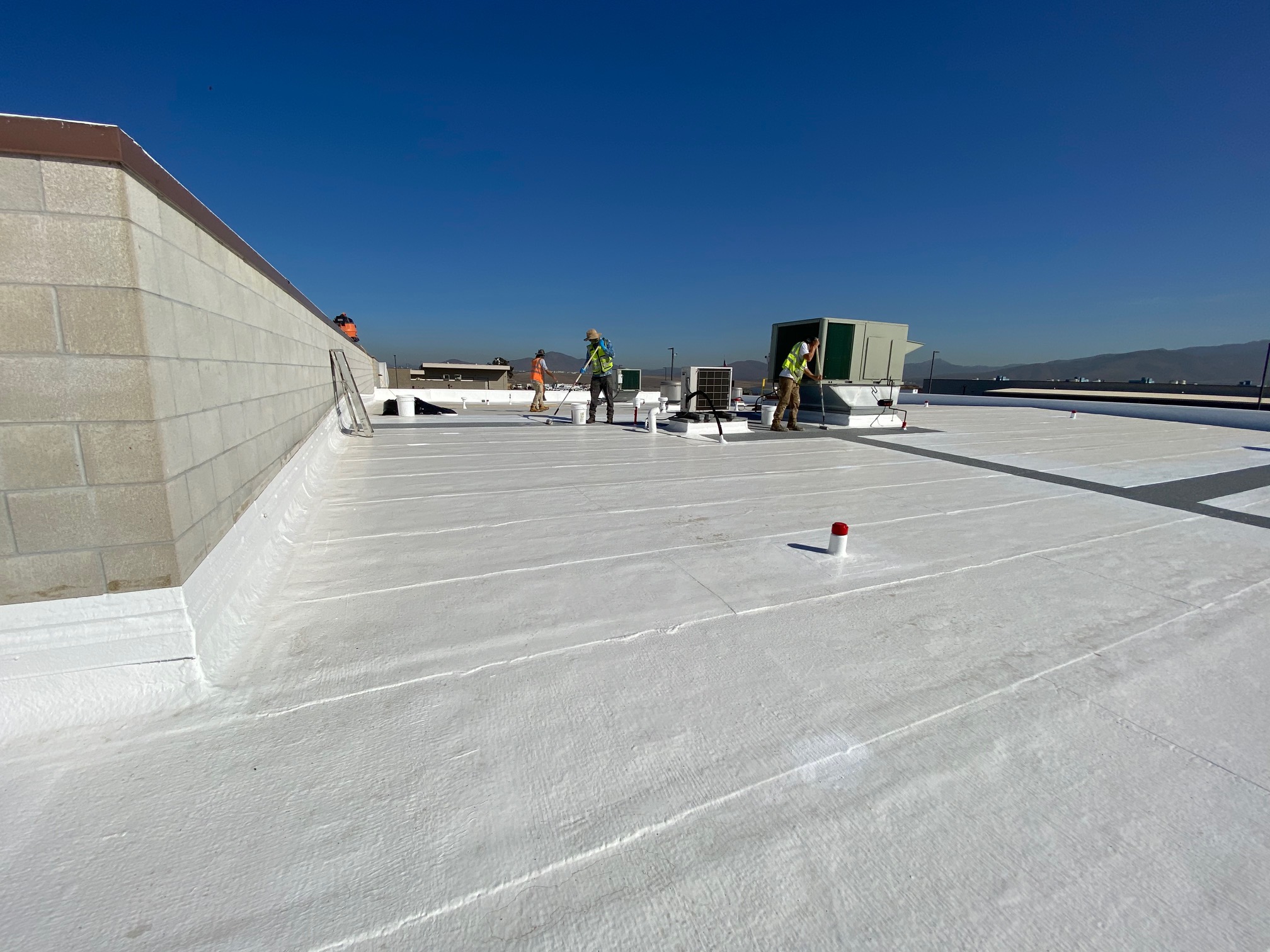
When Silicone Coating Is the Right Scope for a St Louis Building
Silicone coating is the right scope when the existing membrane substrate is structurally sound, confirmed by moisture-core sampling and surface inspection, when the membrane is showing surface-level deterioration such as oxidation, chalking, granule loss, or minor cracking that does not indicate through-membrane water infiltration, and when the owner wants to extend the asset by 10 to 15 years without the capital and operational disruption of full replacement.
Buildings in the St Louis market that are common candidates: Earth City and Hazelwood warehouse and distribution buildings with aging EPDM that has been patched repeatedly but still has dry insulation in the field zones. Clayton and Brentwood office buildings with 1990s-era modified bitumen that is showing surface oxidation but has not failed through to the insulation. And any commercial building where the owner's capital horizon does not support full replacement within the next five years but also cannot afford to carry an unprotected aging membrane into the next several rain seasons.
Substrate Preparation: The Work That Determines the Result
Silicone coating bond strength depends on surface preparation more than on any other variable in the installation. On EPDM substrates, this means power washing to remove chalk, oxidation, and biological growth, followed by application of an EPDM-compatible primer that promotes silicone adhesion to the rubber surface. On modified bitumen, loose granules must be removed and blister areas must be cut, dried, and re-adhered before coating. On spray foam substrates, any areas of foam degradation must be addressed before coating is applied.
We assess every substrate defect during the pre-coating inspection and address it in the prep scope before coating application begins. A silicone coating applied over an unaddressed blister or a lap seam that is starting to lift is a repair that was skipped. It will fail in that location regardless of how well the rest of the coating goes down. The prep scope is not optional, and on older roofs with multiple repair generations, the prep scope can represent 30 to 40 percent of the total project cost. That is accurate, not excessive.
Application Rates and Warranty Paths
Silicone coating systems are applied in one to two passes to achieve the mil thickness required by the manufacturer's warranty program. Standard commercial warranty programs require 20 dry mils total thickness for a 10-year warranty and 30 dry mils for a 15-year warranty. Application rate is measured and documented. We use wet film thickness gauges during application to verify that the applied mil thickness will achieve the specified dry mil thickness at the expected evaporation rate, and we core-sample the coating at representative locations after cure to confirm.
Most major coating manufacturers offer renewable warranty programs for silicone systems. At the end of the warranty term, a clean, prepare, and recoat scope can renew the warranty for another 10 to 15 years without tear-off. For St Louis commercial building owners managing long-term asset holds, the renew-and-recoat path offers a documented capital lifecycle at a fraction of replacement cost. That path only works if the substrate has stayed dry between cycles, which is why the pre-application moisture core is the prerequisite that determines whether coating is even on the table.
Ponding Water Tolerance in the St Louis Climate
The spring rainfall pattern in St Louis, which regularly delivers three to five inches in multi-day events from April through June, creates ponding conditions on commercial flat roofs across the metro after every significant storm. The Mississippi and Missouri River confluence makes St Louis one of the more flood-adjacent commercial real estate markets in the Midwest, and even buildings well above the floodplain experience persistent ponding at low areas when the storm drainage system is overwhelmed by concentrated rainfall.
Silicone coating systems perform in continuous ponding, a specific advantage over acrylic and polyurethane coatings. For South City industrial buildings where the drain layout produces chronic standing water in the low zones, silicone is the appropriate coating specification. We document ponding area locations during inspection and specify additional mil thickness in those zones, recognizing that ponding areas are the highest-stress zones on the roof and warrant the extra protection layer that the additional mils provide.
Energy Performance of Silicone Coatings on St Louis Buildings
White silicone coatings convert dark EPDM or modified bitumen surfaces to high-reflectance cool roofs at 40 to 50 percent of the cost of full membrane replacement. The coating's solar reflectance index typically exceeds 90, comparable to new white TPO or PVC membrane. For large-footprint buildings in the Earth City and Hazelwood industrial corridors where the roof is a primary driver of cooling load, the energy benefit of the reflectance conversion is a secondary return on the coating investment, in addition to the primary benefit of extending the membrane's service life.
Missouri energy code does not mandate specific reflectance values for existing commercial buildings undergoing coating rather than full replacement, but Energy Star's roofing product certification program does provide a pathway that some St Louis commercial owners use for sustainability reporting and tenant attraction. We specify coatings that meet Energy Star's reflectance and emittance thresholds on every project where the building owner has a sustainability reporting requirement, and we document the product certification in the closeout package.
Cost Comparison: Coating vs Replacement for Aging St Louis Membranes
The installed cost of a silicone coating restoration on a qualifying St Louis commercial building typically runs $2.00 to $4.00 per square foot depending on substrate condition and required mil thickness. A full TPO replacement on the same building runs $7.00 to $12.00 per square foot. For a 50,000-square-foot Earth City distribution building, that difference is $250,000 to $400,000 in capital saved today, in exchange for a 10-to-15-year warranted service extension rather than a 20-year replacement term.
We present the coating-versus-replacement comparison in writing on every coating candidacy assessment. The comparison uses actual project-specific costs for both paths, the remaining estimated service life of the existing membrane without coating, and the capital cost that the renewal-and-recoat program delivers over the 30-year planning horizon. Building owners who are managing capital against a depreciation schedule often find the coating path materially improves their capital efficiency for the next one to two budget cycles. We do not recommend coating when the substrate does not support it, and we do not recommend replacement when the coating path delivers the right outcome for the owner's situation.