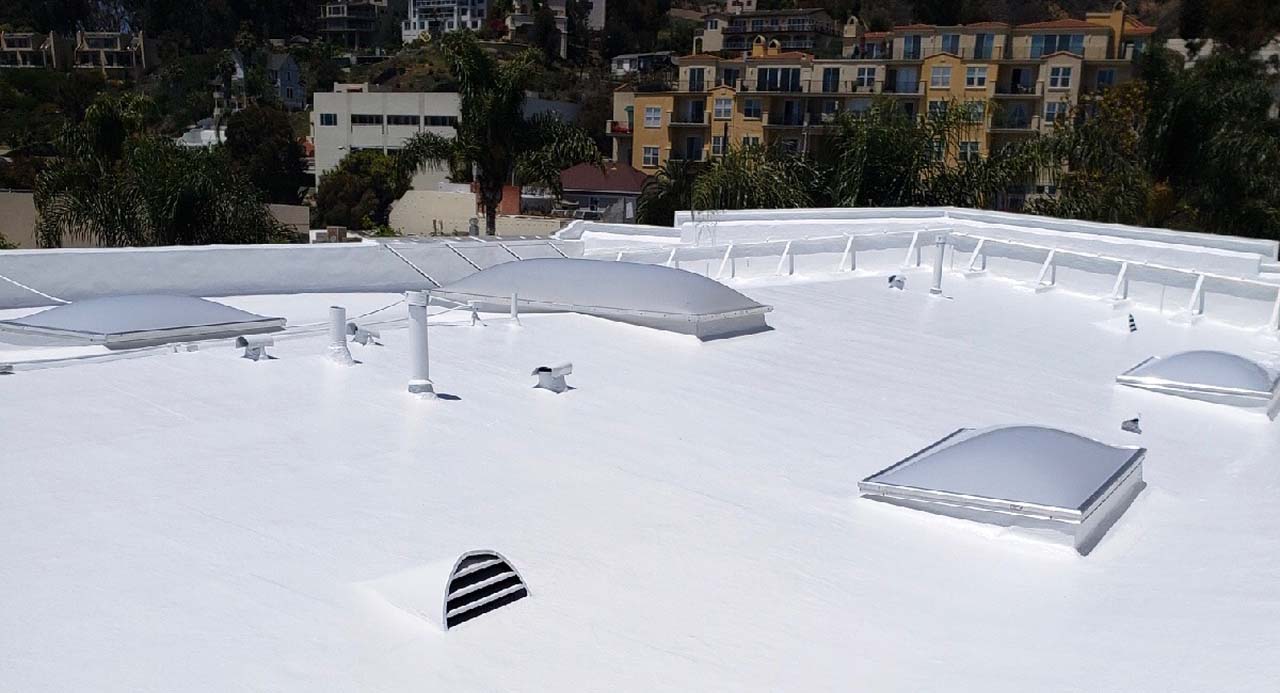
Condition Assessment, The Planning Foundation
A replacement scope written without a documented condition assessment is a guess. The membrane system, the insulation condition, the deck condition, the parapet and flashing details, the drain layout and capacity, the rooftop equipment and penetration inventory, all of these are inputs to a replacement scope, and all of them require a roof walk and physical investigation to document accurately.
Our condition assessment protocol covers the full roof field with a zone-by-zone visual inspection, moisture core pulls at representative locations and at drain and parapet zones, deck-inspection ports at any location where we suspect deck deterioration, and a penetration and equipment inventory. The report documents what we found, where we found it, and what it means for the replacement scope, including deck conditions that will affect cost and schedule, insulation moisture that will determine whether a recover is feasible, and flashing conditions that are often underestimated in generic replacement scopes.
In St Louis, the parapet and perimeter flashing inspection is particularly important. Freeze-thaw cycling accelerates flashing deterioration at the parapet-to-membrane transition, a detail that may look acceptable in summer but has been working loose through winter. We photograph and note every parapet condition, every penetration sealant condition, and every edge-metal profile during assessment. These details are in the replacement scope, not left for the installation crew to improvise.
Scope Development, What the Replacement Document Covers
Membrane system specification: Membrane type, manufacturer, thickness, attachment method, and why, referenced to the building's use, wind-uplift zone, and capital horizon. We are manufacturer-agnostic and document the basis for each specification decision so the owner can evaluate alternatives if competitive bids propose substitutions.
Insulation specification: Primary insulation type and thickness (calculated against Missouri energy code), cover board specification, tapered insulation package if ponding correction is part of the scope, vapor retarder if the building's use and climate analysis require it. The insulation specification is one of the items most commonly underspecified in generic replacement scopes, we write it to code with the calculations documented.
Detail specifications: Parapet flashing, drain replacement or rebuild, penetration flash details, perimeter edge metal, expansion joint covers. These details are specified with manufacturer-published standard drawings referenced. Generic specifications that say 'install per manufacturer recommendations' without specifying which detail drawing are not adequate for a bid document.
Sequencing Plans and Occupant Protection
A commercial building occupied during a roof replacement requires a sequencing plan that protects tenants from the two primary disruption risks: water infiltration during production and construction noise and access disruption. For St Louis commercial buildings, where the occupied tenant may be a medical office, a law firm on the Forsyth corridor, or a manufacturing operation in Hazelwood, those risks have real cost consequences if the sequencing plan is not specific.
Our sequencing plan documents the daily section size (how much membrane is torn off per day, and how the dry-in is staged so no open section is left overnight), the pre-construction notification to tenants, the crane and material-staging plan (which matters enormously on urban buildings in Clayton and Downtown St Louis, where streetscape access is constrained), and the weather-monitoring protocol. Spring in St Louis means squall lines, and a sequencing plan that does not account for how the crew will respond to a storm approaching at 2 PM on a day with open tear-off is not a real plan.
For medical-building work on the BJC HealthCare or SSM Health campuses, and for major institutional buildings in Clayton and CWE, the sequencing plan includes a pre-construction coordination meeting with the building's facilities director, a written review of infection-control constraints that affect material movement through the building, and a utility coordination plan that identifies any roof penetrations associated with active mechanical systems.
Replacement Timing Around Missouri's Weather Calendar
St. Louis commercial roof replacement is most reliably executed in the spring window from April through May and the fall window from September through October. Missouri's summer severe weather season limits daily production certainty from June through August, and the winter window from November through March limits installation to days when substrate temperatures exceed the minimum for sound membrane installation. The spring window, before the thunderstorm season peaks, offers the most reliable production conditions of the year.
Material lead times for St. Louis commercial roofing projects typically run two to four weeks for standard TPO, EPDM, and polyiso from regional distributors. Building owners who initiate the specification and material ordering process in February typically receive materials in the April production window. Projects that are specified in response to an emergency or at the peak of the spring storm season face supply constraints that can push production into the June through August window with its afternoon thunderstorm management requirements.
St. Louis Permit Process for Commercial Roof Replacement
Commercial roof replacement in the City of St. Louis requires a building permit from the Building Division of the City's Streets, Traffic, and Refuse Department. St. Louis County municipal jurisdictions each have their own permit processes, and the major municipalities in Chesterfield, Ballwin, and Manchester have permit review timelines that vary from a few days to two weeks depending on project complexity and current permit workload. We manage the permit application as part of pre-construction and include the permit lead time in the project schedule.
Missouri's energy code cool-roof compliance documentation is required in the permit application for commercial roof replacement in most St. Louis jurisdictions. We include the membrane's rated solar reflectance and the insulation assembly's R-value documentation in the permit application package as standard practice, which reduces the probability of a permit review comment that delays issuance.