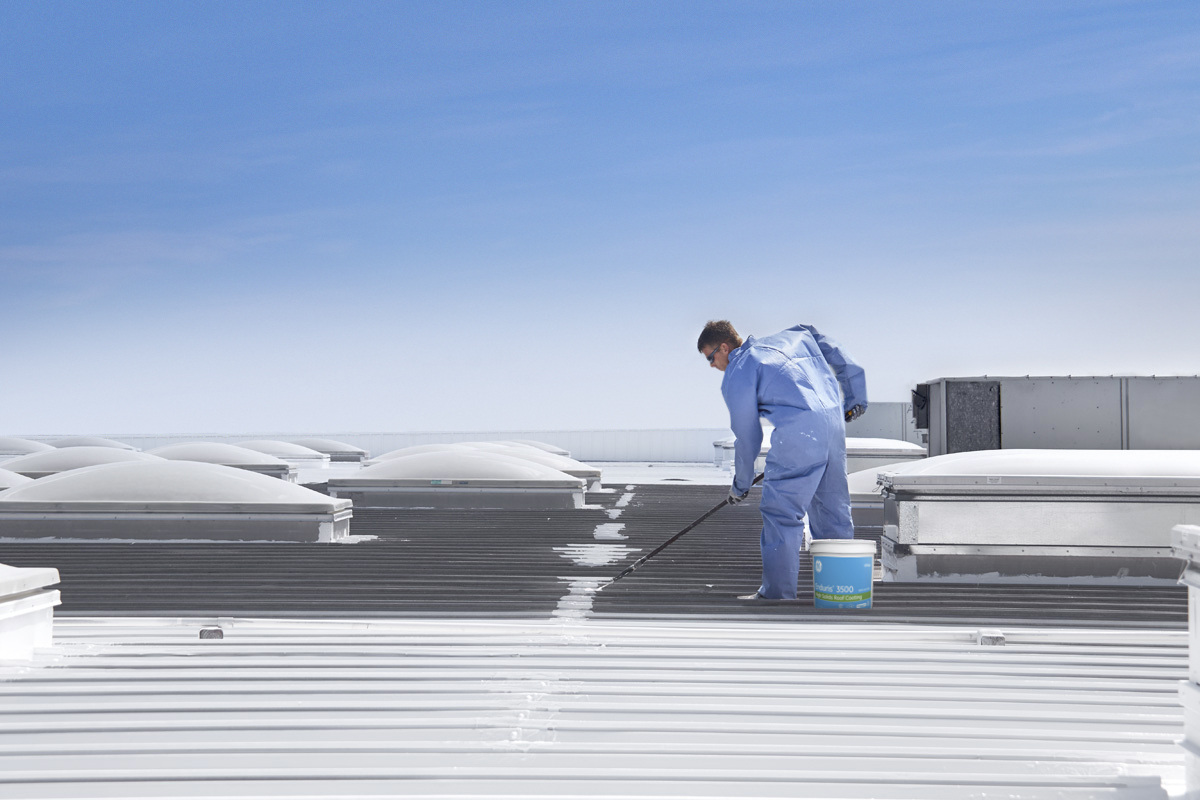
Qualification: What Makes a Roof Coating-Eligible in St Louis
Dry insulation is the non-negotiable requirement. We pull moisture cores in five to ten locations across every roof we are considering for a coating scope. If more than 10 percent of core readings indicate saturated insulation, coating is not the right answer. The coating will seal moisture in, accelerate insulation degradation, and fail from the bottom up. On St Louis roofs with a history of freeze-thaw infiltration, we expect to find wet insulation in parapet zones and at low drainage areas, and we scope those zones for replacement before the coating application begins.
Membrane adhesion must be adequate for the coating system. We test adhesion using a pull-test protocol per the manufacturer's requirement. Chalking or oxidized EPDM that does not accept the primer bond, heavily UV-degraded TPO with compromised surface energy, and built-up roofing with loose gravel or delaminating cap sheets all require surface preparation or localized repair before coating can begin with confidence.
Coating Systems We Install
Silicone roof coating: The primary system for St Louis commercial flat roofs. Silicone is moisture-cure and handles ponding water without breaking down. Its reflectance rating, typically 0.85 to 0.90 solar reflectance, reduces surface temperatures significantly on roofs that previously carried dark EPDM or gravel-surfaced BUR. On a 50,000-square-foot Hazelwood warehouse carrying aging EPDM, the cooling-load reduction from a silicone coating is measurable in the first summer season after installation.
Acrylic roof coating: Appropriate for metal buildings, for commercial buildings with adequate slope, and as a re-coat layer over existing acrylic systems. Acrylic builds film thickness with multiple coats and provides good reflectance. It is water-based, lower in VOC than solvent-based coatings, and is the system most contractors and owners are familiar with from metal building applications throughout the metro.
SPF (spray polyurethane foam) with coating topcoat: SPF adds insulation value and creates a fully adhered, seamless system by eliminating all existing seams and penetrations under the foam. The foam requires a protective coating topcoat, typically silicone, to protect it from UV degradation. SPF systems are a stronger capital investment than a simple coating and are best suited for buildings where insulation improvement is part of the scope.
Coating Performance in the St Louis Climate
The St Louis freeze-thaw cycle is relevant to coating performance at the membrane-to-coating interface. Coatings applied at inadequate film thickness, or applied over surface contamination that was not fully removed during preparation, can delaminate during the first hard freeze after installation. We meet minimum dry-film thickness requirements on every coating project and test application rates with wet-film gauges during production to catch under-application in real time.
Reflectance and heat mitigation: Downtown St Louis commercial rooftops in the blocks along Washington Avenue and in the mid-century office towers have historically carried dark-surfaced BUR and EPDM systems that run surface temperatures above 160 degrees Fahrenheit in July. A silicone coating with 0.85 initial solar reflectance reduces those surface temperatures significantly, directly reducing cooling load on HVAC equipment below the roof surface. For buildings leased to tenants on gross leases where the owner carries utility costs, the payback on that reflectance improvement can be measured in years, not decades.
Pre-Coating Repair and Surface Preparation
The existing membrane must be clean, dry, and free of chalk, debris, and contamination before coating begins. Pressure washing is standard on most substrates. Areas with mechanical fastener backout, open seams, or previous repair patches require spot repair and primer before coating. Surface prep is where most coating failures originate: a contaminated surface produces poor adhesion, which produces coating delamination at exactly the high-stress areas where the roof needs the coating most.
Reinforcement fabric at seams and penetrations is included in every coating scope we install. Polyester mesh embedded in the base coat at all seams, flashings, penetrations, and parapet-to-field transitions provides the failure-point coverage that coating alone at standard film build does not deliver. We do not treat reinforced details as an optional upgrade. They are a standard scope item because the coating investment depends on the details holding under St Louis thermal cycling and freeze-thaw exposure.
Warranty Terms and Re-Coat Paths
Most silicone and acrylic coating manufacturers offer 10-year to 15-year renewable warranties on qualifying coating installations. The warranty requires a pre-installation substrate report and a manufacturer inspection at completion. We handle the manufacturer documentation as part of the standard project closeout. We also manage the warranty documentation and re-inspection schedule for coating projects we install so the owner does not need to track the warranty term independently.
At the end of the warranty term, the surface can be pressure-washed, spot-repaired, and re-coated at a fraction of the cost of replacement. Some owners in the St Louis market have run two consecutive coating cycles on the same substrate, extending total service life to 25 to 30 years from the first coating installation. Re-coat qualification uses the same protocol as initial coating qualification: moisture cores, adhesion tests, and drainage review.
Drainage Assessment Before Coating
Silicone coatings are rated for ponding water exposure, but standing water that ponds for more than 48 hours after a rainfall event indicates a drainage deficiency that should be corrected before coating. We require all drains to be clear and functioning before coating begins, and we specify additional coating thickness at low points where minor ponding is unavoidable. We document pond locations and depths during our pre-coating inspection and, where addressable, include tapered insulation fill or drain adjustment in the preparation scope.
St Louis receives enough annual rainfall that drainage adequacy is not a theoretical concern. Thunderstorm events in the summer frequently deliver two to three inches per hour, and a commercial flat roof with inadequate drainage will pond significantly during those events. Coating a roof that ponds adds cost without solving the drainage problem, and the coating perimeter at the drain rings degrades faster under sustained water contact than the field membrane does.