Services

Roof Recover Systems in St Louis

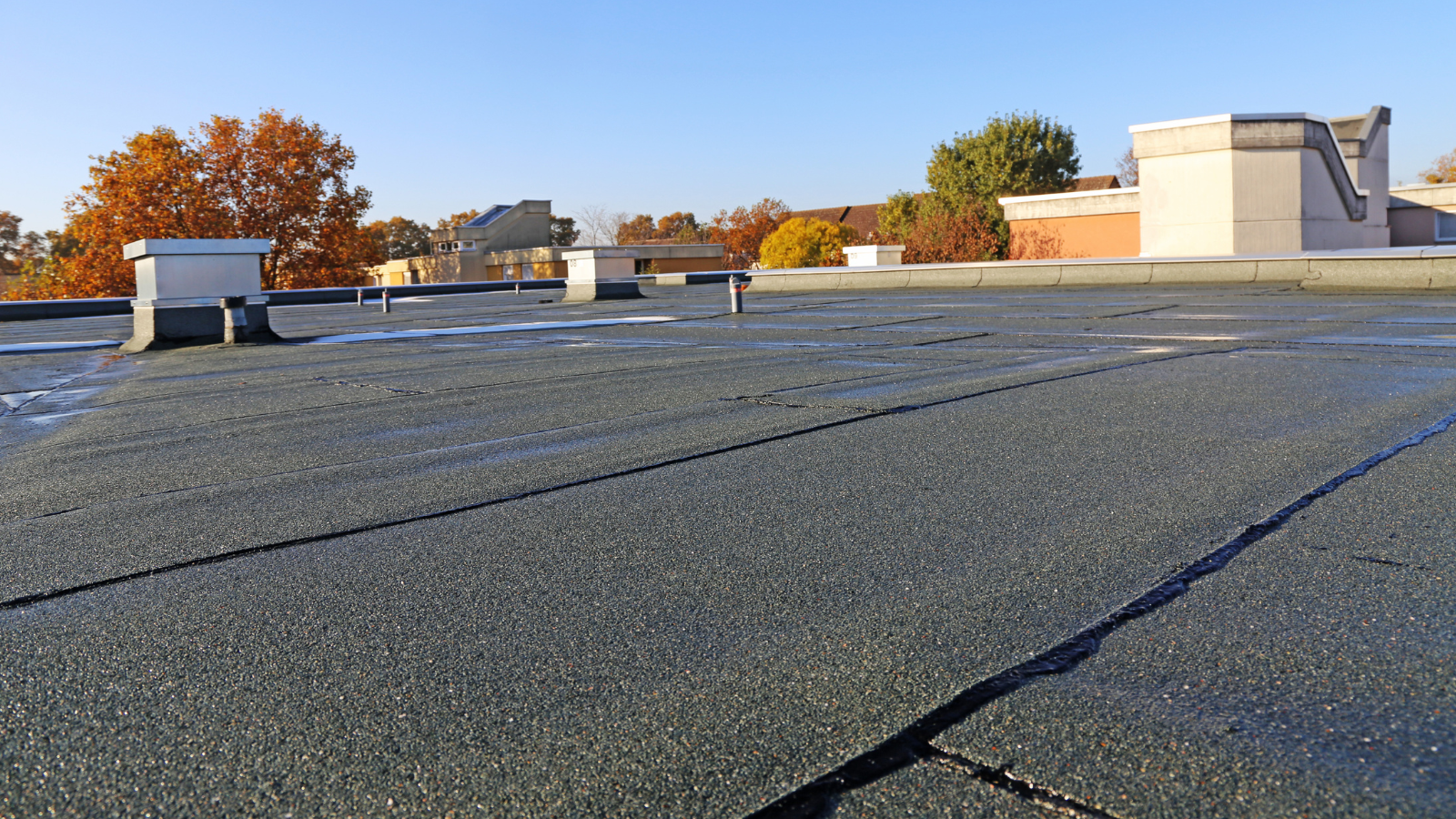
When the existing roof's deck and insulation are sound, a recover system, new single-ply membrane or modified bitumen over the existing substrate, can extend service life 20-plus years at a fraction of replacement cost.

Services

Roof Recover Systems in St Louis

A roof recover is not a compromise. When the substrate qualifies, dry insulation, sound deck, adequate membrane adhesion, installing a new roof system over the existing one produces a fully warranted commercial roof at 40 to 60 percent of the cost of a full tear-off and replacement. The building avoids landfill disposal cost for the old membrane and insulation. The project is completed in less time. The owner gets a manufacturer warranty path that is materially identical to what a replacement would produce.

The qualification decision is the entire work product of a recover assessment. We pull moisture cores, evaluate deck condition through inspection ports at suspect locations, and test existing membrane adhesion before we recommend a recover scope. If more than 25 percent of the insulation is wet, or if the deck shows deterioration at multiple locations, tear-off and replacement is the right call, recovering a compromised substrate does not fix the underlying problem, it conceals it.

St Louis's specific climate conditions shape the recover decision in ways that warmer-climate markets do not face. Freeze-thaw cycling opens seams and flashings that look sound in warm weather. A roof that passes a summer inspection may have wet insulation by March from moisture that infiltrated through winter-cracked perimeter flashing. The recover assessment we run in early spring catches that moisture before it disappears in June and the owner recovers a wet substrate under a new warranty.

Roof Recover Systems in St Louis

Scope clarity

What the written scope needs to settle

When the existing roof's deck and insulation are sound, a recover system, new single-ply membrane or modified bitumen over the existing substrate, can extend service life 20-plus years at a fraction of replacement cost.

The written recommendation should separate immediate water-control work, system-level defects, drainage concerns, warranty limitations, access constraints, and capital timing so ownership can decide without guessing.

Recover System Options and When Each Applies

TPO recover over existing membrane: The most common recover configuration in the St Louis market for commercial low-slope roofs. New polyiso cover board over the existing membrane (adds insulation value, creates a smooth substrate for the new TPO), mechanically attached or fully adhered TPO over the cover board. Manufacturer 20-year NDL warranty available on qualifying substrates from most major TPO manufacturers. Appropriate for EPDM, BUR, and modified bitumen substrates where the core assessment shows dry insulation.

EPDM recover: Mechanically attached or fully adhered EPDM over existing membrane with polyiso cover board. Often specified for industrial buildings, distribution centers, manufacturing facilities in Earth City, Hazelwood, and Berkeley, where the 60-mil EPDM's resistance to mechanical traffic is a priority and the building's thermal environment favors EPDM over TPO.

Modified bitumen recover: SBS or APP modified bitumen cap sheet over existing BUR or existing modified bitumen. The recover system that makes the most sense on older BUR-substrate buildings in the South City industrial corridor and on institutional buildings in the CWE that have concrete decks. Modified bitumen recover can be torch-applied, cold-applied, or self-adhering depending on the substrate and project conditions. Torch application is not appropriate on substrates with combustible components, we specify cold-applied or self-adhering systems in those situations.

Moisture Core Protocol, The Recover Decision Gate

Every recover assessment pulls cores. Not probes, not infrared alone, physical cores that cross-section the membrane and insulation stack and give us direct visual and tactile evidence of moisture condition. Infrared scanning is a useful screening tool on large roofs to prioritize core locations, but it reads temperature differential, not moisture content, and can miss wet insulation in overcast conditions or during periods without adequate temperature cycling. We use infrared when it adds value, and we follow up every suspect infrared zone with a physical core.

Our core locations are determined by roof zone, we pull at the interior field of each distinct drainage area, at each interior drain, at parapets (the most common moisture entry points on St Louis commercial roofs), and at any location showing visible surface distress. Core results are documented by location, photographed, and mapped to a roof zone diagram. The core report is the basis for the recover-versus-replace recommendation, the owner sees the data, not just the conclusion.

The 25-percent wet-insulation threshold is the standard recover-qualification criterion across major TPO and EPDM manufacturers. At or below that threshold, targeted tear-off of wet zones with new insulation installation and cover board over the dry field is the recover path. Above it, we recommend full replacement, not because we prefer the larger scope, but because recovering a system with widespread wet insulation produces a warranted roof that will fail again on the same timeline as the existing one, for the same reasons.

Recover vs. Replace, The Capital Decision

Recover is the right scope when the substrate qualifies. Replacement is the right scope when it does not. The capital difference matters: a 50,000 sq ft flat roof in St Louis is a $200,000 to $300,000 replacement scope and a $120,000 to $175,000 recover scope if the substrate qualifies. That difference is meaningful for a property manager running a capital budget that has to cover multiple buildings.

The cases where owners push for a recover on a substrate that does not qualify are the cases that produce early warranty claims and contractor disputes. We document the qualification decision in writing, the core results, the wet-area percentage, the deck condition observations, so the owner has the information they need to make the capital decision, not just our recommendation. If the owner decides to recover a marginally qualifying substrate, we document that decision and the associated warranty limitations clearly in the project scope.

Missouri Code and St. Louis Recover Eligibility

Missouri's adoption of the IBC limits commercial buildings to two total roofing membranes before tear-off is required. The City of St. Louis, St. Louis County, and the major municipalities in the metro all enforce this limitation through the building permit process. We document the existing assembly ply count through core sampling before recommending any recover scope, and we advise when the code limit has been reached.

Missouri's energy code also requires that recover membranes meet the minimum cool-roof reflectance standard for Climate Zone 4A. A recover specification that installs a dark or non-compliant membrane over the existing system is not a code-compliant installation in the St. Louis metro, and it will not pass the building permit inspection required for permitted recover work.

Recover System Selection for St. Louis's Freeze-Thaw Climate

Mechanically attached TPO recover over existing single-ply or modified bitumen is the most common recover scope on St. Louis commercial buildings with dry insulation. The specification needs to account for Missouri's wind uplift exposure and ensure the fastener pattern meets the design criteria for the building's specific exposure classification. Cover board installation between the existing membrane and the new TPO is standard in our St. Louis recover scopes.

EPDM recover over modified bitumen or BUR is sometimes specified on St. Louis buildings where chemical resistance or cold-process installation is preferred. The adhesive and seam tape application temperature requirements for EPDM recover impose the same shoulder season scheduling constraints as new EPDM installation. We factor these constraints into the project schedule for St. Louis EPDM recover projects.


Start with evidence from the roof, then decide the repair, coating, recover, or replacement path.

Roof Questions

What owners usually need clarified

How many existing roof layers can be recovered over?

Most building codes and manufacturer warranty programs limit recover systems to one layer over one existing membrane. Buildings that already have one recover layer must tear off before a new warranted system can be installed. We verify the existing layer count during assessment, some St Louis commercial buildings have had multiple recover attempts over a long history, and the documentation does not always reflect that.

What happens to the old membrane when you recover over it?

It stays in place as part of the assembly, which is the primary cost advantage of a recover over tear-off and replacement. The existing membrane and insulation are not removed, which eliminates disposal cost and reduces installation time. The existing material is effectively converted into part of the new insulation stack.

Will a recover system meet current Missouri energy code?

It can, with the right cover board specification. Adding polyiso cover board as part of the recover system contributes R-value to the assembly. Whether the total recovered assembly meets current code depends on the existing insulation R-value plus the cover board addition. We calculate the assembly R-value as part of the recover scope and specify cover board thickness to comply.

How does the recover vs replacement decision differ in Missouri's climate versus other markets?

Missouri's continental climate produces insulation moisture levels that are higher on average than desert markets, which shifts more St. Louis buildings toward the replacement column rather than recovery. The humid summers and freeze-thaw winters that characterize Missouri produce more moisture accumulation in aging insulation assemblies than the same membrane age in a dry-climate market. The core assessment result is therefore more frequently at or above the 25 percent threshold on St. Louis buildings than comparable buildings in Albuquerque or Las Vegas. We treat the moisture assessment as determinative rather than indicative when making the recover recommendation.

Related Roof Decisions

Keep the conversation connected

These pages cover nearby roof questions owners often need to resolve before a final scope moves forward.

Services

Built-Up Roofing in St Louis

Multi-ply built-up roofing systems for St Louis commercial buildings, new installation, recover over existing BUR, and core assessment on buildings carrying decades of BUR history.

Services

Commercial Roof Coatings in St Louis

Fluid-applied coatings can extend a qualifying commercial roof another 10 to 15 years at 30 to 50 percent of full-replacement cost, if the substrate qualifies. We inspect first, coat only what will hold, and back the.

Services

Commercial Roof Condition Reporting in St Louis

Written condition reports for St Louis commercial roofs, documented for capital planning, property acquisition due diligence, insurance claims, and portfolio-level asset tracking.

Services

Commercial Roof Inspections in St Louis

A roof inspection from our team is a written condition report, not a verbal summary. We document what we find, membrane condition, flashing failures, drain status, penetration detail integrity, with photos keyed to a.

Roof Systems

TPO Roof Systems in St Louis

Thermoplastic polyolefin is the volume-grade flat-roof membrane for the St Louis commercial market. We install TPO on mechanically attached, fully adhered, and induction-welded configurations, each scoped to the.

Capabilities

Roof Condition Reporting, St Louis Commercial Buildings

Condition reports are the foundation of every capital decision we support. We produce written, photo-keyed reports that give St Louis building owners a zone-by-zone picture of the roof's current state, not a verbal.