Services

Hail Damage Roof Repair in St Louis

St Louis sits on one of the most active hail corridors in the central United States. After a significant storm event, we inspect, document, and repair hail-damaged commercial flat roofs, with written reports formatted for insurance carriers and independent adjusters.

Services

Hail Damage Roof Repair in St Louis

The storm track that drops large hail across the St Louis metro is well-established, cells that build over Kansas and Oklahoma in spring and early summer frequently track northeast across Missouri and Illinois, and the corridor from Jefferson City through St Louis to the Metro East is one of the highest-frequency large-hail zones in the country. When two-inch hailstones hit a 60-mil TPO membrane at 90 mph, the damage is not always visible from the ground.

Most commercial building owners in the metro first notice hail damage when the roof starts leaking, sometimes weeks or months after the impact event, once freeze-thaw cycling opens impact-fractured sealant or a deflected seam finally fails. By then, the connection between the storm event and the damage can be harder to establish, and the repair scope is larger than it would have been if the damage had been documented and addressed promptly.

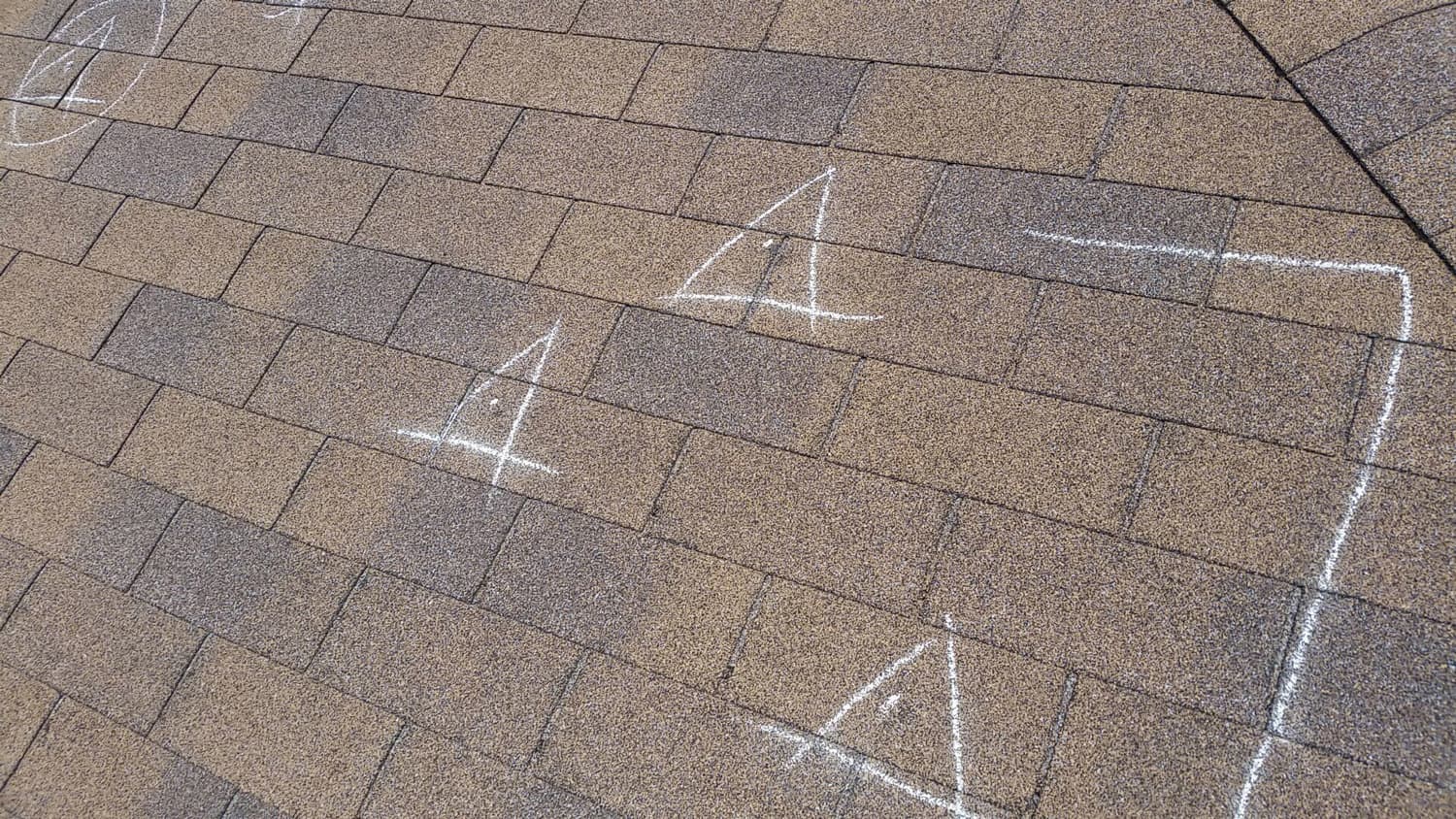
After a named storm event or a credible hail report for the St Louis area, we recommend getting a post-storm inspection on any roof that took the track. Our inspections are documented with photos of each impact point, impact density counts by zone, and a written assessment of membrane integrity, the same format that insurance adjusters and independent loss consultants use when working with commercial property carriers.

Hail Damage Roof Repair in St Louis

Scope clarity

What the written scope needs to settle

St Louis sits on one of the most active hail corridors in the central United States. After a significant storm event, we inspect, document, and repair hail-damaged commercial flat roofs, with written reports formatted for insurance carriers and independent adjusters.

The written recommendation should separate immediate water-control work, system-level defects, drainage concerns, warranty limitations, access constraints, and capital timing so ownership can decide without guessing.

How Hail Damages Commercial Flat Roofs

Single-ply membranes, TPO, EPDM, PVC, respond to hail impact differently than steep-slope asphalt shingles. The membrane does not necessarily split or puncture at impact. What often happens is bruising: the hail compresses the membrane and the underlying insulation, fracturing the insulation and sometimes creating a hidden micro-fracture in the membrane that is not immediately visible as a puncture but fails under water pressure during the next rain event.

Flashings are more vulnerable than the membrane field. Hail impacts on parapet cap metal, edge metal, and HVAC curb flashings can crack sealant joints, dent and separate metal flanges, and damage the counter-flashing termination that keeps water out of the wall behind the parapet. These are points of entry that develop into interior damage quickly.

Built-up roofing and modified bitumen systems show hail damage differently, impact craters in the gravel surface of BUR, or fracture lines in the modified bitumen cap sheet. We know how to read hail damage on every commercial membrane type installed across the St Louis market.

Post-Storm Inspection and Documentation

Our post-hail inspection follows a systematic protocol across the full roof field, not just the obvious failure points. We document impact locations by GPS coordinates or zone diagram reference, photograph each impact with scale reference, count impacts by zone to establish impact density, probe membrane integrity at impact locations, and inspect all flashings and penetrations for impact damage separately.

The written report includes: storm event data (date, reported hail size from National Weather Service records, storm track), impact density map by roof zone, close-up photos of representative impacts with scale measurement, flashing damage documentation, and a repair scope recommendation with cost band.

We produce this report in a format that commercial property insurance adjusters recognize. If the owner is filing an insurance claim, the report gives the adjuster a consistent documentation basis to work from. We do not guarantee claim outcomes, we produce accurate documentation of physical conditions.

Hail Damage Repair Approach

Membrane impact repairs are categorized by severity. Impacts that have not fractured the membrane, bruising only, are documented and monitored. Impacts with confirmed membrane compromise are repaired with compatible membrane patch material welded or adhered per manufacturer spec. Where impact density is high enough that the field is compromised throughout a zone, zone replacement may be the appropriate scope rather than individual impact patching.

Flashing repairs address cap metal damage, sealant joint restoration, and counter-flashing re-termination where impacts have separated the flashing from the wall or curb. We do not use caulk gun repairs as the primary fix on hail-damaged flashings, sealant alone does not restore structural flashing integrity after a significant impact event.

For buildings where hail has also damaged rooftop HVAC equipment, we coordinate with the mechanical contractor. We scope our work around the equipment removal and reinstallation schedule so the roof is not left open during the equipment service.

Working with the Storm Season in St Louis

St Louis's peak hail season runs March through September, with the highest frequency of significant events in April, May, and June. After a major storm event, we typically have a backlog of inspection requests from across the metro. We triage by reported hail size, events with confirmed two-inch or larger hail get inspection priority because the membrane damage at that size is most likely to require immediate attention.

After inspections are complete, we sequence repair work by leak status first, then by damage severity. Buildings with confirmed leaks or compromised membranes get into the repair queue before buildings with documented but stable damage. Owners who want to hold off on repair while an insurance claim is processed get a written hold recommendation with our assessment of the leak risk in the interim.

St. Louis Hail Season Documentation and Claim Support

The Mississippi River corridor storm track produces regular hail events across the St. Louis metro from March through October, with the peak hail season from April through June. The Boeing Hazelwood industrial corridor, the distribution centers along I-44 and I-55, and the retail and commercial buildings in the suburban growth corridors of Chesterfield and Ballwin all face this hail exposure. After significant hail events, we mobilize within 48 hours for pre-adjuster documentation on commercial buildings in the affected area.

Missouri commercial property insurers are familiar with hail claims from the Mississippi corridor market. Adjusters active in this market understand the climate well and approach claims with an established framework for distinguishing storm-caused damage from UV and freeze-thaw pre-existing conditions. Our documentation format is designed to work within that framework: hard-surface spatter evidence on metal components establishes the storm event, membrane damage mapping by zone distinguishes storm impact from pre-existing degradation, and the written report presents the scope of damage in the format that adjuster files require.


Start with evidence from the roof, then decide the repair, coating, recover, or replacement path.

Roof Questions

What owners usually need clarified

How soon after a hailstorm should we get an inspection?

Within two weeks of the event if possible. Early documentation supports the insurance claim timeline and catches fast-developing leak points before they cause interior damage. Waiting until the roof leaks means the connection between storm and damage is harder to document.

Does hail damage always void a manufacturer warranty?

Most manufacturer warranties exclude damage from hail as a named peril, that is typically a property insurance matter, not a warranty matter. The inspection report we produce documents the physical conditions for both the warranty administrator and the insurance carrier.

Do you work directly with insurance adjusters?

We produce documentation that adjusters can use. We do not act as public adjusters or advocate for specific claim values, that is outside our scope and licensing. We provide the physical documentation; the claim process is between the owner, their carrier, and their adjuster.

How do you handle hail damage claims on buildings with active manufacturer warranties in St. Louis?

When hail damages a warranted assembly in St. Louis, we notify the manufacturer's warranty department before beginning any permanent repair and coordinate the repair scope with the warranty terms. Storm damage to the membrane field itself may be covered under the warranty depending on the cause of the damage and the coverage language. Installation-related vulnerabilities that made the membrane more susceptible to hail impact are warranty concerns. We review the warranty terms and the damage pattern together to determine what the warranty investigation requires before the repair scope is finalized.

Related Roof Decisions

Keep the conversation connected

These pages cover nearby roof questions owners often need to resolve before a final scope moves forward.

Services

Built-Up Roofing in St Louis

Multi-ply built-up roofing systems for St Louis commercial buildings, new installation, recover over existing BUR, and core assessment on buildings carrying decades of BUR history.

Services

Commercial Roof Coatings in St Louis

Fluid-applied coatings can extend a qualifying commercial roof another 10 to 15 years at 30 to 50 percent of full-replacement cost, if the substrate qualifies. We inspect first, coat only what will hold, and back the.

Services

Commercial Roof Condition Reporting in St Louis

Written condition reports for St Louis commercial roofs, documented for capital planning, property acquisition due diligence, insurance claims, and portfolio-level asset tracking.

Services

Commercial Roof Inspections in St Louis

A roof inspection from our team is a written condition report, not a verbal summary. We document what we find, membrane condition, flashing failures, drain status, penetration detail integrity, with photos keyed to a.

Roof Systems

TPO Roof Systems in St Louis

Thermoplastic polyolefin is the volume-grade flat-roof membrane for the St Louis commercial market. We install TPO on mechanically attached, fully adhered, and induction-welded configurations, each scoped to the.

Capabilities

Roof Condition Reporting, St Louis Commercial Buildings

Condition reports are the foundation of every capital decision we support. We produce written, photo-keyed reports that give St Louis building owners a zone-by-zone picture of the roof's current state, not a verbal.