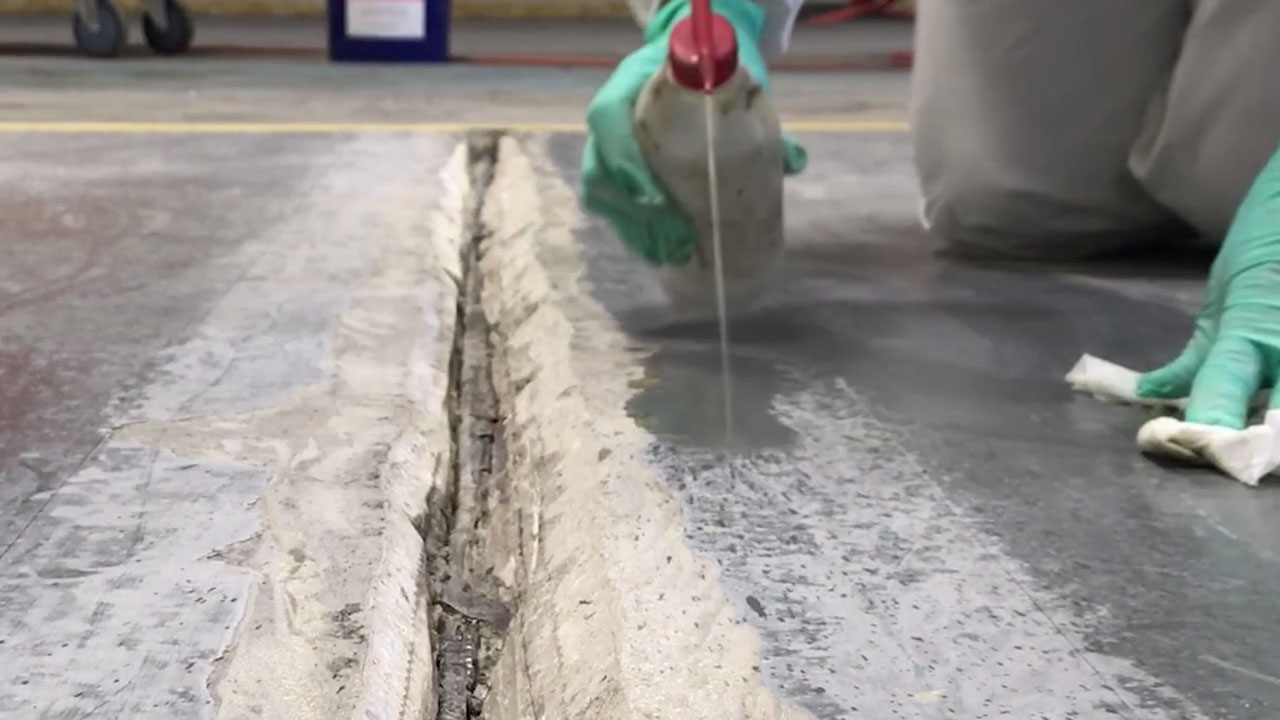
How Expansion Joint Cover Assemblies Fail
The bellows or compression seal at the center of the expansion joint cover is the primary failure point. This element is made of EPDM, neoprene, or a compatible elastomer and is designed to compress and expand as the joint opens and closes. After years of UV exposure and thermal cycling in the St Louis climate, the elastomer hardens, cracks, and eventually tears, no longer bridging the joint in a watertight configuration.
The metal cover flanges that fastener the assembly to the roof surface on both sides of the joint can also fail. fastener screws corrode or pull loose from the substrate. The flange-to-membrane junction, where the roofing membrane is integrated with the cover assembly base, deteriorates as sealant dries out or as the flange separates from the membrane under differential movement.
In buildings with larger structural movement than the original expansion joint was designed to accommodate, a situation that can develop as a building settles over decades, the cover assembly may be physically stretched beyond its design range, producing tearing at the flange edges rather than at the bellows center.
Repair Versus Replacement
Expansion joint cover repair, resealing the flange-to-membrane junction, replacing a deteriorated elastomeric insert, and re-fastening loose flanges, is appropriate when the cover assembly's structural elements are intact and the failure is limited to the sealant, the insert, or the fastener condition. Many expansion joint failures in the St Louis commercial building stock fall into this category: the assembly itself is sound, the sealant at the membrane junction has failed, and a systematic reseal and re-fastener scope restores watertightness.
Full cover replacement is required when the cover assembly is physically compromised, cracked or torn flanges, bellows that have failed structurally rather than just at the sealant, or assembly dimensions that no longer match the joint's actual movement range. Replacement involves removing the existing assembly, re-prepping the joint substrate, and installing a new cover assembly sized to the joint's current movement requirements.
We do not recommend repair when the existing assembly's elastomeric components are hardened to the point of zero flexibility. A bellows that cannot flex cannot protect the joint, it is a water-shedding plate at best, and a false sense of security at worst.
Membrane Integration at Expansion Joints
The roofing membrane, TPO, EPDM, or PVC, must be properly integrated with the expansion joint cover assembly at both flanges. Manufacturer warranty requirements specify exactly how the membrane terminates at the cover flange: the membrane must lap onto the flange at a minimum distance, be fully adhered in that lap zone, and be sealed at the termination edge with compatible sealant.
On many St Louis commercial buildings we inspect, the membrane-to-cover integration is not manufacturer-compliant, either because the original installation was done incorrectly, because a prior repair patched the area without restoring the detail, or because membrane shrinkage over time has pulled the termination lap below the minimum required coverage. We restore the detail to manufacturer specification as part of every expansion joint repair scope.
Where the membrane field immediately adjacent to the expansion joint has been damaged by joint movement, a common finding when cover assembly failure has been deferred and the joint opening has been abrading the membrane edge, we replace the affected membrane field section before installing the new cover flange lap.
Expansion Joints in the St Louis Building Stock
Larger commercial buildings, multi-wing institutional buildings, and buildings that extend more than 150 to 200 linear feet without a structural break typically require expansion joints. The BJC HealthCare campus buildings in Central West End, the large warehouse and distribution buildings in the Hazelwood and Maryland Heights industrial corridors, and many of the mid-century Downtown office buildings all have expansion joints that are now approaching or past their designed service life.
We inspect expansion joints as part of our standard commercial roof inspection. Joints that are showing early deterioration, sealant cracking, slight flange separation, initial bellows hardening, are flagged for scheduled repair before they reach active failure. Early intervention is consistently less expensive than emergency repair after the joint has been leaking for a full season.
Missouri Climate Engineering Requirements for St. Louis Expansion Joints
St. Louis's temperature range from near zero degrees Fahrenheit in winter cold snaps to 100 degrees in July heat produces a temperature differential of approximately 100 degrees annually. Expansion joint covers on St. Louis commercial buildings must be specified to accommodate the movement this range produces in the structural system below the joint. A cover system specified for the national average temperature range will fail from fatigue at the bellows arc within a few seasons on a building experiencing Missouri's actual temperature extremes.
The Mississippi and Missouri river valley convergence in St. Louis also means that building foundations and structural frames in the river bottom industrial zones experience moisture cycling that can add horizontal movement to the thermal movement the joint cover must accommodate. Buildings along the river corridor with joints that show unusual movement patterns beyond thermal variation may have foundation settlement contributing to joint width changes, which changes the cover system specification.