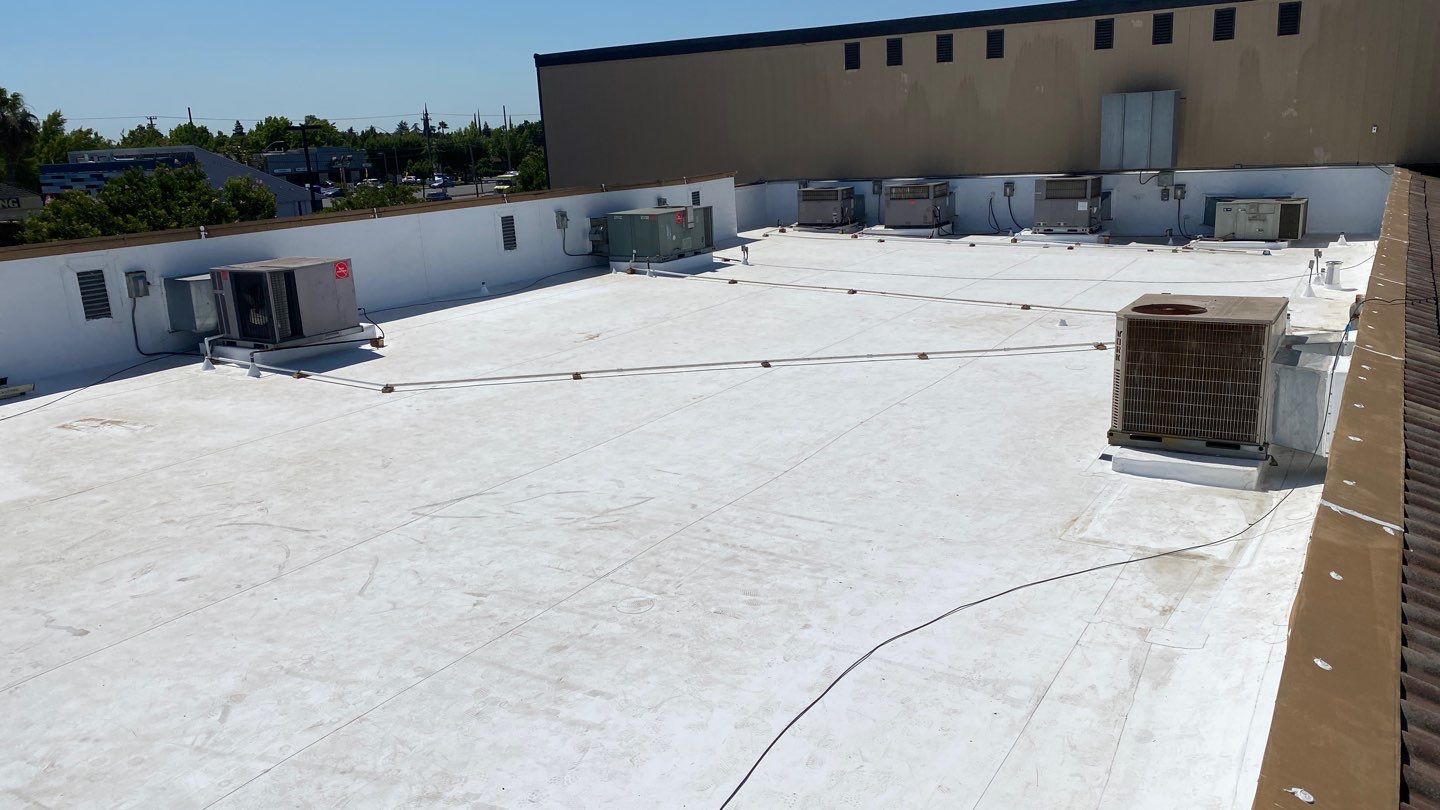
What a St Louis Maintenance Inspection Covers
Membrane field survey: We walk every section of the membrane field, noting blisters, punctures, surface oxidation, and areas of standing water. Blisters are documented with probe tests to determine whether the blister is above the membrane, which is aesthetic, or below it, which indicates moisture. Standing water is mapped against the drain layout to identify drainage deficiencies that need correction before the next freeze season.
Flashing and perimeter inspection: The parapet, edge metal, and all roof-to-wall transitions are inspected and documented. In St Louis, this is the highest-priority zone of any maintenance inspection because freeze-thaw cycles attack flashing sealant and metal terminations more aggressively than the membrane field. Failed sealant at cap flashing joints, lifted base flashing at parapet transitions, and compressed or deteriorated edge metal are all noted and addressed under our minor repair protocol if they fall within the defined scope.
Drain service: Every drain is cleared of debris, the drain bowl is inspected for cracking or displacement, and the drain-to-membrane interface is inspected for seam separation. Slow drains are the most preventable cause of recurring leaks on St Louis commercial roofs, backed-up water against a low edge detail especially in winter produces ice-dam loading that opens details that would otherwise last another decade.
Warranty Maintenance Documentation Requirements
Most major commercial membrane manufacturers, including GAF, Firestone, Carlisle, Johns Manville, and Sika, require bi-annual inspection and maintenance as a condition of their NDL warranty programs. The documentation required typically includes a date-stamped inspection report, a photo log of conditions found, a written record of any minor repairs performed, and the installer's certification that the repair was performed per manufacturer specification.
We produce this documentation in a format that matches what manufacturers require for warranty compliance. Every maintenance inspection report is filed in the building's warranty maintenance record. Buildings that carry Anheuser-Busch-level institutional standards for their facility documentation, or buildings in the Centene and Enterprise Holdings corporate campuses in Clayton, typically require maintenance contractors to meet specific documentation and insurance standards. We produce documentation in the formats those organizations require.
Seasonal Maintenance Calendar in St Louis
Spring inspection (March through April): Scheduled after the last significant freeze risk has passed. This inspection documents all damage that the winter freeze-thaw cycle produced: opened seams, cracked cap flashing sealant, lifted base flashing at parapets, drain damage from ice loading. Minor repairs found during spring inspection are addressed at the same visit under the maintenance program's included-repair budget.
Fall inspection (September through October): Scheduled before the first anticipated frost. This inspection focuses on drainage, clearing drains and gutters of summer debris, addressing any slow-drain conditions before they become ice-dam risks, and documenting any membrane or flashing conditions that need repair before freeze exposure. Fall is also when we update the condition record and revise the capital planning recommendation for replacement horizon.
Post-storm response: After significant storm events, including major derecho systems, large hail, and ice storms, maintenance program clients receive priority inspection response. We walk affected buildings within five business days of a significant weather event and document any damage found, separate from the standard bi-annual schedule.
Minor Repair Scope Under Maintenance Programs
Each maintenance program includes a defined minor repair budget that covers common, small-scope repairs identified during the inspection visit. This typically includes sealant replacement at penetration collars and cap flashing joints, probe-testing and re-welding of small seam sections, drain strainer replacement, and membrane patch work on minor punctures or abrasion damage. The included-repair budget is documented in the maintenance agreement so the building owner knows what is covered without additional authorization.
Repairs that exceed the minor scope, major flashing replacement, significant seam failures, structural drain replacement, or membrane damage from impact, are scoped and quoted separately for the owner's review before work begins. We do not charge for identifying repairs that fall outside the minor scope. The inspection finding determines what the building needs, and the owner receives a separate written quote before any major repair work is authorized.
Priority Response for Maintenance Clients
Commercial buildings on our maintenance program receive priority emergency dispatch when the St Louis metro sees a significant weather event. After a derecho or major hail event, the demand for emergency roofing response across the metro exceeds available contractor capacity within hours. Maintenance program clients in the primary service corridors, Clayton, St Louis City, Chesterfield, and Creve Coeur, are dispatched ahead of non-contract calls.
Emergency calls under a maintenance contract are invoiced separately from the program. The scheduled spring and fall inspections are not consumed by emergency response. A dry-in call after a May hail event and a scheduled spring inspection in April are two separate line items. The maintenance program fee covers planned, scheduled visits. Unscheduled emergency work is priced at standard emergency rates, with priority dispatch as the benefit to contract clients.
Multi-Building Portfolio Maintenance Programs
Portfolio owners with three or more buildings in the St Louis metro typically see lower per-visit cost on maintenance programs because we can schedule route days that cover multiple properties in sequence. A Clayton building and a Creve Coeur building often share a route day, reducing mobilization cost per visit. The documentation format is uniform across all buildings in a portfolio: same zone diagram structure, same report format, same manufacturer submission process.
For property managers handling multi-building portfolios across the St Louis County commercial corridors, the uniform documentation format means any building's condition report is immediately readable without learning a new system. The portfolio-level capital summary we produce annually shows every building's condition tier and replacement horizon in a single view, which is the input the asset manager needs for multi-year capital allocation rather than a collection of individual contractor reports.