

Service Areas

Commercial Roofing in Maplewood, MO

Maplewood is a mature inner suburb with a dense commercial corridor along Manchester Road and a mix of light industrial, mixed-use, and small commercial buildings. The roof stock here runs older than most of the outer suburbs, and it shows.

Service Areas

Commercial Roofing in Maplewood, MO

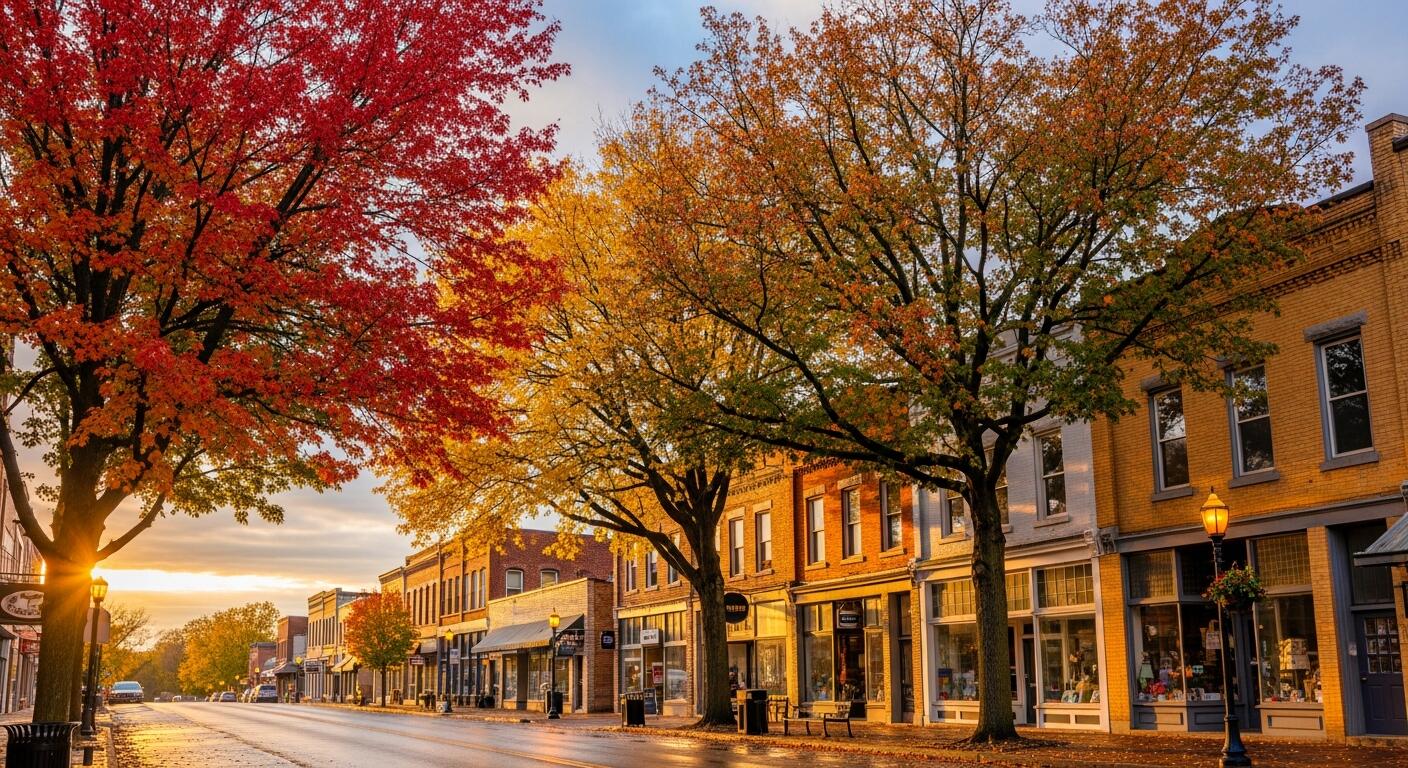
Maplewood, Missouri sits at the intersection of Manchester Road and the Brentwood border, a compact inner suburb with a commercial district that developed primarily in the mid-twentieth century. The Manchester Road corridor through Maplewood is one of the denser commercial strips in the inner metro, auto-related businesses, restaurants, small professional offices, and the retail and mixed-use buildings that have seen Maplewood's business district evolve from a traditional main street into a more active restaurant and entertainment corridor over the past fifteen years.

The commercial roof stock in Maplewood reflects the age of the buildings. Most of the Manchester Road corridor commercial buildings were built between 1940 and 1980. The ones that have not had a full replacement in the past 20 years are carrying aged built-up roofing or early-generation EPDM systems with a substantial repair history. Some of these buildings have had ownership changes without a roof inspection, which means the current owner may not know what the roof actually contains.

We work in Maplewood regularly. The inner suburbs along Manchester Road, Maplewood, Brentwood, Richmond Heights, are part of our standard service territory from the Downtown St Louis office, and we run inspection calls through this corridor consistently.

Commercial Roofing in Maplewood, MO

Scope clarity

What the written scope needs to settle

Maplewood is a mature inner suburb with a dense commercial corridor along Manchester Road and a mix of light industrial, mixed-use, and small commercial buildings. The roof stock here runs older than most of the outer suburbs, and it shows.

The written recommendation should separate immediate water-control work, system-level defects, drainage concerns, warranty limitations, access constraints, and capital timing so ownership can decide without guessing.

The Manchester Road Commercial Corridor

Manchester Road is the main commercial artery through Maplewood, running east-west through the center of the city. The commercial buildings along this corridor range from one-story retail masonry buildings from the 1950s and 1960s to small mixed-use buildings with residential above and commercial below, a property type common in Maplewood's main-street-era development pattern.

The one-story masonry commercial buildings on Manchester Road typically have concrete or structural steel decks with built-up roofing or EPDM systems installed during the 1980s or 1990s. These systems are at or past the end of their manufacturer warranty lives, and many have accumulated multiple layers of repair coating or modified-bitumen overlay that obscures the original membrane condition. When we inspect a Manchester Road building, we pull cores at suspected failure zones and at drain areas to document what is actually there, not what the last inspection summary said was there.

Maplewood's Restaurant and Mixed-Use District

The blocks around Manchester and Sutton Avenues have developed into one of the more active restaurant districts in the inner suburbs over the past decade. Restaurant buildings present specific roofing challenges: kitchen exhaust penetrations require corrosion-resistant flashing details (grease degrades standard TPO flashing compounds over time if the details are not grease-rated), rooftop HVAC units require regular coordinated maintenance, and the heavy foot traffic from staff accessing rooftop equipment accelerates membrane wear in traffic corridors.

For restaurant buildings we have recently taken on in Maplewood, we typically find at least one exhaust penetration where the flashing was installed without a grease-rated detail and the membrane is showing early degradation around the curb. That is a repair item in the short term and a replacement scope driver over the medium term. We document it, specify the right detail, and leave the owner with a clear picture of what the timeline looks like.

Light Industrial and Warehouse Properties

Maplewood's residential and commercial mix includes a scattering of light industrial and small warehouse buildings, particularly on the east side of the city toward the Manchester-Hanley intersection. These buildings tend to have large, low-slope roofs with minimal rooftop equipment and older built-up roofing systems that have not been addressed since original construction.

Large low-slope roofs on Maplewood light-industrial buildings accumulate ponding water in the low spots created by insulation compression over decades. That ponding accelerates membrane degradation and eventually reaches the insulation. We design replacement scopes for these buildings with tapered insulation to eliminate the low spots, not just a flat replacement that recreates the drainage problems the current roof has.

Start with evidence from the roof, then decide the repair, coating, recover, or replacement path.

Roof Questions

What owners usually need clarified

How do you handle a restaurant building with multiple exhaust penetrations?

We map every penetration during the inspection and document the flashing detail at each one against the membrane manufacturer's spec. Exhaust penetrations on restaurant buildings require grease-rated flashing details, standard TPO sealants and flashings degrade when exposed to grease-laden exhaust. We specify the correct detail in the repair or replacement scope and photograph the installed detail at closeout.

What do you typically find on a Manchester Road building that has not been reroofed since the 1990s?

Usually: accumulated repair patches over the original membrane, drain sumps that have lost their depth from insulation compression around the drain body, and parapet flashing that has been re-caulked multiple times without addressing the underlying flashing substrate. Moisture cores often show wet insulation in two or three areas. The scope that comes out of that inspection is rarely a simple recover.

Can you work on an occupied Maplewood commercial building without closing the tenant?

Yes. We sequence work in sections and dry-in each section before moving to the next. For restaurant buildings, we schedule the most disruptive work, crane days, debris removal, during off-hours or on days when the tenant is closed. We coordinate that schedule with the tenant before mobilization.

Related Roof Decisions

Keep the conversation connected

These pages cover nearby roof questions owners often need to resolve before a final scope moves forward.

Service Areas

Commercial Roofing in Alton, IL

Alton sits on the high bluffs above the Mississippi River confluence, 25 miles north of Downtown St Louis, a historic manufacturing and river city with a diverse commercial base that includes healthcare, manufacturing,.

Service Areas

Commercial Roofing in Arnold, MO

Arnold is the commercial gateway to Jefferson County, a city at the I-55 and Richardson Road interchange where South St Louis County transitions into Jefferson County, with a growing commercial corridor of retail,.

Service Areas

Commercial Roofing in Ballwin, MO

Ballwin's commercial stock is concentrated along Manchester Road and Big Bend Boulevard, strip centers, medical office buildings, community retail, and the mixed-use development that has filled in around the Westglen.

Services

Commercial Roof Inspections in St Louis

A roof inspection from our team is a written condition report, not a verbal summary. We document what we find, membrane condition, flashing failures, drain status, penetration detail integrity, with photos keyed to a.

Roof Systems

TPO Roof Systems in St Louis

Thermoplastic polyolefin is the volume-grade flat-roof membrane for the St Louis commercial market. We install TPO on mechanically attached, fully adhered, and induction-welded configurations, each scoped to the.

Capabilities

Roof Condition Reporting, St Louis Commercial Buildings

Condition reports are the foundation of every capital decision we support. We produce written, photo-keyed reports that give St Louis building owners a zone-by-zone picture of the roof's current state, not a verbal.