Service Areas

Commercial Roofing in Central West End, St Louis

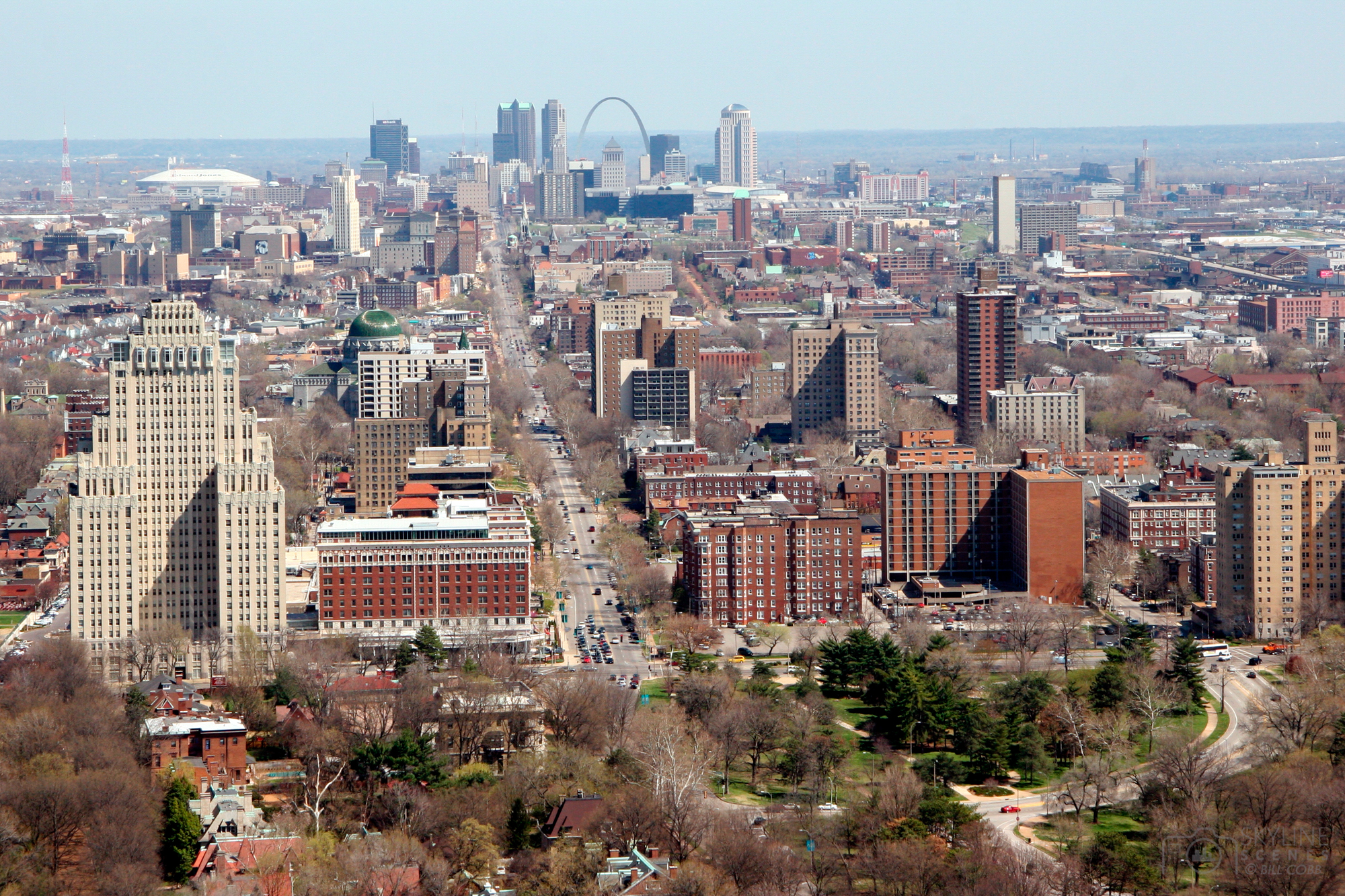
Central West End runs from the BJC HealthCare and Washington University Medical campuses on the east to the Cortex Innovation District, one of the most active commercial real estate zones in the St Louis metro. We work on medical, laboratory, office, and mixed-use buildings throughout the corridor.

Service Areas

Commercial Roofing in Central West End, St Louis

Central West End is two distinct commercial real estate environments in close proximity. The BJC HealthCare campus, centered on Barnes-Jewish Hospital, Barnes-Jewish West County, and Children's Hospital of St Louis, along with Washington University Medical Center's research and clinical buildings represents the highest concentration of medical and laboratory rooftop square footage in the St Louis metro. A half-mile to the south, the Cortex Innovation District stretches along Forest Park Avenue and has brought several million square feet of new and adaptive-reuse commercial space online since 2002, including the Cambridge Innovation Center and a growing life-sciences and tech tenant base.

Roofing work in CWE requires different planning frameworks depending on which zone you are operating in. Medical campus work is driven by infection-control protocols, occupied-facility sequencing, and rooftop mechanical coordination with hospital facilities teams. Cortex and mixed-use CWE work is more conventional, but the building stock includes adaptive reuse of older industrial and commercial buildings that carry complex roof histories.

We plan in both. Our project managers who work medical buildings understand the pre-construction coordination process that hospital facilities directors require. We do not show up at a Barnes-Jewish auxiliary building with a crew and start opening the roof without a written scope approved by the hospital's facilities team.

Commercial Roofing in Central West End, St Louis

Scope clarity

What the written scope needs to settle

Central West End runs from the BJC HealthCare and Washington University Medical campuses on the east to the Cortex Innovation District, one of the most active commercial real estate zones in the St Louis metro. We work on medical, laboratory, office, and mixed-use buildings throughout the corridor.

The written recommendation should separate immediate water-control work, system-level defects, drainage concerns, warranty limitations, access constraints, and capital timing so ownership can decide without guessing.

BJC and WashU Medical Campus Roofing

Barnes-Jewish Hospital, Children's Hospital of St Louis, and the Washington University Medical Center buildings along Euclid Avenue and Forest Park Avenue represent a substantial and technically demanding segment of the CWE commercial roofing market. Medical buildings have rooftop mechanical systems, chiller plants, air-handling units, medical gas systems, exhaust fans for laboratory and sterile spaces, that cannot be interrupted without coordinated shutdowns planned well in advance.

Infection-control protocols on a hospital campus affect how roofing materials move through the building. Debris cannot be staged in areas adjacent to patient care spaces; elevator use is typically restricted to freight elevators during specific hours; and any penetration work that disturbs the envelope above an active clinical space requires a written infection-control risk assessment. We build all of that into the pre-construction scope, it is not a surprise mid-project.

We also understand that medical buildings have long capital planning horizons and that the facility director managing the Barnes-Jewish auxiliary building we are working on today is likely managing the capital plan for a dozen other buildings. Consistent condition documentation, same format, same level of detail, same warranty-closeout package on every project, matters to that person. We produce it.

Cortex Innovation District, New and Adaptive-Reuse Stock

The Cortex Innovation District has added a significant volume of new construction and adaptive-reuse commercial space along Forest Park Avenue, Duncan Avenue, and Boyle Avenue since the district's founding. The newer construction, glass-and-steel office and lab buildings, is running relatively modern TPO and EPDM systems on well-documented decks. The adaptive-reuse buildings are more varied: former industrial and warehouse structures converted for office and laboratory use, often with roof modifications that occurred during the conversion that are not fully documented in the building's records.

We have inspected several Cortex-area adaptive-reuse buildings where the conversion contractor added rooftop HVAC equipment and cut new penetrations through the existing membrane without following manufacturer flashing details. Those penetrations are leak sources that show up two or three years after the conversion when the temporary sealant work fails. When we walk a Cortex building that was converted in the past decade, we specifically document every penetration for flashing compliance, not just the membrane field condition.

Euclid Avenue Mixed-Use and the Residential Over Retail Pattern

The Euclid Avenue and Maryland Avenue commercial corridors in CWE include a significant number of residential-over-retail and mixed-use buildings where the commercial ground floor and upper-floor apartments share a single roof system. These buildings present a specific challenge: the residents directly below the roof are the most sensitive to leaks and the most likely to escalate a roof problem quickly, but the roof work itself has to be sequenced to avoid disrupting residential tenants during the work.

Access on these buildings is often through a residential stairwell or a shared lobby, which constrains how materials move from street level to the roof. We can plan projects on Euclid Avenue mixed-use buildings and we understand the access constraints, the noise management expectations from residential tenants, and the scheduling windows that building owners in this corridor typically work within.

Rooftop Equipment Density in CWE

Central West End commercial buildings, particularly on the medical campus and in the Cortex district, have some of the highest densities of rooftop mechanical equipment in the St Louis metro. High equipment density means more penetrations, more curb flashings, more penetration sleeves, and more points where the membrane meets the mechanical system. Each of those points is a potential water entry that requires manufacturer-compliant flashing details to stay weathertight.

On CWE buildings with dense equipment, we produce a penetration-and-curb map as part of the inspection deliverable, a roof diagram that documents every piece of equipment, every penetration, and every curb flashing with its current condition rating. That map becomes part of the project scope, the closeout package, and the maintenance inspection protocol going forward.


Start with evidence from the roof, then decide the repair, coating, recover, or replacement path.

Roof Questions

What owners usually need clarified

Can you work on active patient-care buildings at Barnes-Jewish or Children's Hospital?

Yes. We have planned and executed projects on occupied medical buildings. The process involves a pre-construction meeting with the hospital's facilities director, a written infection-control risk assessment for any work above active clinical spaces, and a phased sequencing plan that keeps the building dry at all times. We do not start medical-campus work without that coordination completed.

How do you handle roof penetrations in Cortex adaptive-reuse buildings?

We document every penetration against the membrane manufacturer's published flashing detail during the inspection. Penetrations that were installed without a compliant flashing detail get noted in the condition report with a repair or replacement specification. On buildings going into a full replacement, those details are addressed in the scope, not left as deferred maintenance after the new membrane is installed.

Do you carry the insurance levels required for hospital campuses?

We carry general liability, workers' compensation, and umbrella coverage at levels sufficient for most hospital and medical campus requirements. We can provide certificates naming BJC HealthCare, WUSM Facilities Management, or other institutional parties as additional insureds. Send us the specific insurance requirements before the pre-bid meeting and we will confirm compliance in advance.

Related Roof Decisions

Keep the conversation connected

These pages cover nearby roof questions owners often need to resolve before a final scope moves forward.

Service Areas

Commercial Roofing in Alton, IL

Alton sits on the high bluffs above the Mississippi River confluence, 25 miles north of Downtown St Louis, a historic manufacturing and river city with a diverse commercial base that includes healthcare, manufacturing,.

Service Areas

Commercial Roofing in Arnold, MO

Arnold is the commercial gateway to Jefferson County, a city at the I-55 and Richardson Road interchange where South St Louis County transitions into Jefferson County, with a growing commercial corridor of retail,.

Service Areas

Commercial Roofing in Ballwin, MO

Ballwin's commercial stock is concentrated along Manchester Road and Big Bend Boulevard, strip centers, medical office buildings, community retail, and the mixed-use development that has filled in around the Westglen.

Services

Commercial Roof Inspections in St Louis

A roof inspection from our team is a written condition report, not a verbal summary. We document what we find, membrane condition, flashing failures, drain status, penetration detail integrity, with photos keyed to a.

Roof Systems

TPO Roof Systems in St Louis

Thermoplastic polyolefin is the volume-grade flat-roof membrane for the St Louis commercial market. We install TPO on mechanically attached, fully adhered, and induction-welded configurations, each scoped to the.

Capabilities

Roof Condition Reporting, St Louis Commercial Buildings

Condition reports are the foundation of every capital decision we support. We produce written, photo-keyed reports that give St Louis building owners a zone-by-zone picture of the roof's current state, not a verbal.