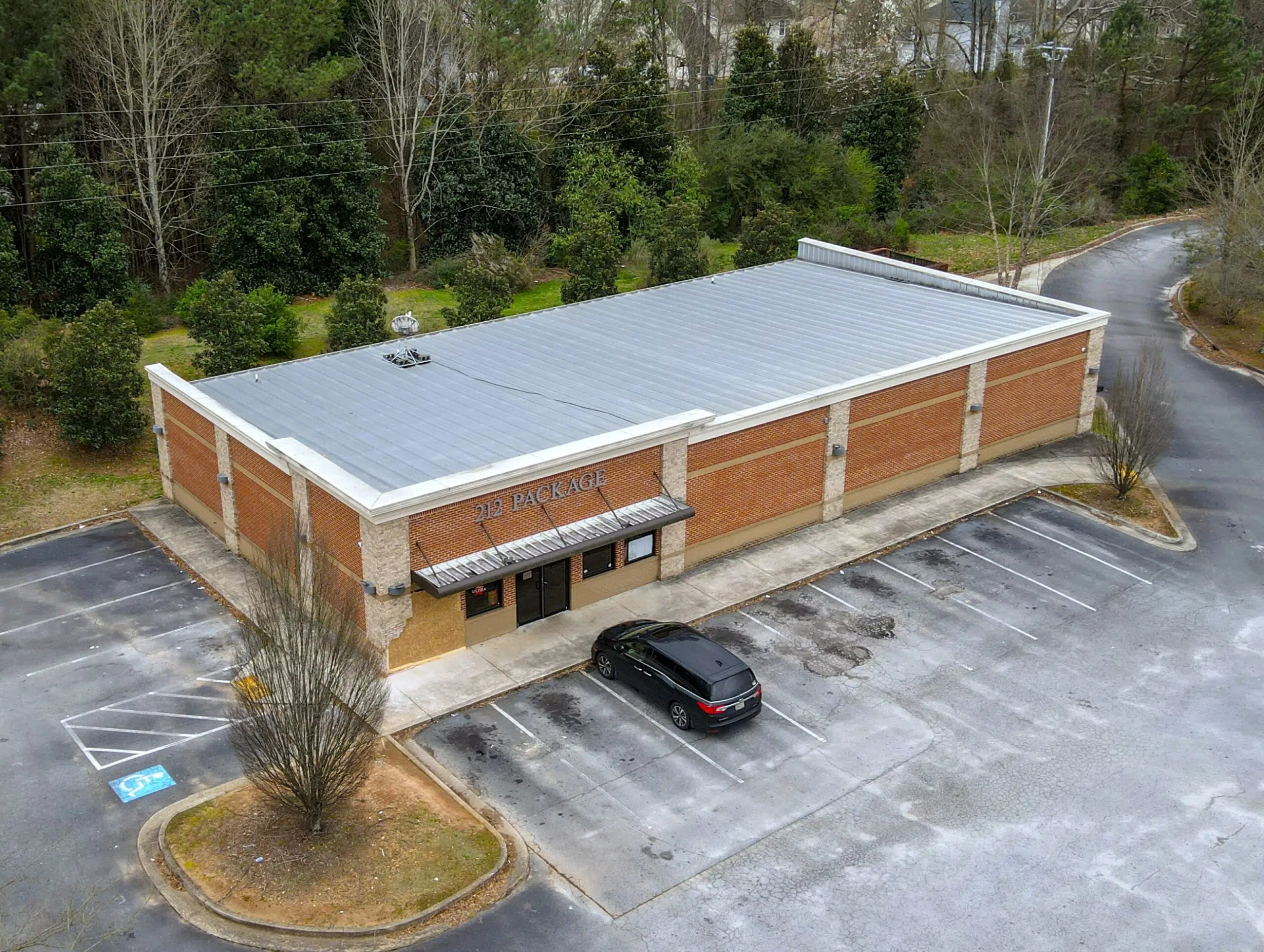
Earth City Industrial Park, High-Volume Flat Roof Work
Earth City is the largest planned industrial park in the St Louis metro, sitting between I-70 and the Missouri River west of the airport. The buildings here range from 1980s tilt-up warehouses with original built-up roofing systems to contemporary cross-dock distribution facilities with modern single-ply membranes. The older BUR-on-metal-deck buildings are the ones We see in the worst condition, multiple recover layers over saturated insulation, with no documentation of when the original system was installed or what has been done to it since.
For Earth City warehouses, the inspection protocol starts with a thorough core pull, minimum ten cores on a 200,000 sq ft building, distributed to catch the wet zones at perimeter areas (where driven rain saturates insulation over time), at interior low-slope areas where the drain system has been partially blocked, and at any visually suspicious areas of the field. That data drives the recover-vs-replace decision, and it gives the owner an honest picture before a capital commitment is made.
Material staging on Earth City sites is straightforward compared to urban projects, most buildings have sufficient lot area for flatbed delivery and material storage. That does not mean the project runs itself. Occupied tenant buildings with active warehouse operations need dock scheduling coordination, staging-zone agreements with the tenant's logistics manager, and a dry-in plan that protects stored inventory below the active work area.
Hazelwood Industrial Corridor, McDonnell Boulevard and Lambert-Adjacent Sites
The Hazelwood industrial corridor runs along McDonnell Boulevard from Lambert's north boundary outward through the Hazelwood industrial and aerospace manufacturing district. Boeing's Hazelwood facilities fastener the western end; a mix of aerospace suppliers, light manufacturing, and warehouse tenants fill the corridor south toward I-70. Many of the buildings in this corridor were built during the 1960s and 1970s to serve the aerospace and auto manufacturing industries that dominated north St Louis County through that period.
These older buildings present specific roofing challenges. Concrete-deck buildings from that era often have modified bitumen or original built-up roofing systems that are approaching the end of their serviceable life. Metal-deck buildings have often had their insulation topped up with a lightweight insulating fill, a practice from that era that creates a complex existing assembly that requires careful documentation before a replacement scope is written.
Wind exposure on Lambert-adjacent sites is also a particular concern. Aircraft operations at Lambert create pressure differentials that can affect roofing systems on buildings immediately adjacent to the flight paths. We often see mechanically attached systems on Lambert-facing roof elevations show fastener pullout patterns consistent with repeated wind loading. On those buildings, we increase fastener density on the windward elevation above the standard IBC code requirement.
Bridgeton, Dock-Door Flashing and Multi-Tenant Industrial
Bridgeton's industrial buildings cluster along Natural Bridge Road and the St Charles Rock Road corridor. Many are multi-tenant industrial buildings with shared dock areas and multiple roof penetrations per tenant, HVAC curbs, gas-line penetrations, electrical conduit entries, and fire-suppression pipe penetrations that each represent a potential leak point. The dock-door threshold zones on these buildings are a recurring maintenance problem: driven rain against a loading dock door gets into the wall-to-roof interface flashing and migrates horizontally into the insulation.
We address dock-door flashing as a primary inspection item on any Bridgeton warehouse We walk. The horizontal flashing at the top of the dock door frame and the membrane termination at the wall above it are critical details that generic maintenance programs overlook. On buildings where tenants have added dock equipment, overhead doors, or dock seals without coordinating with the building owner, those modifications often created un-flashed penetrations that have been leaking for years.
Roof System Selection for St Louis Warehouse Buildings
TPO 60-mil mechanically attached is the standard replacement system for most St Louis warehouse buildings. It performs well under the region's freeze-thaw cycling, handles the UV load of south-facing roof fields on large open buildings, and carries a 20-year manufacturer NDL warranty path that supports the asset's capital horizon. On buildings with heavy rooftop mechanical loads or frequent maintenance traffic, We specify 80-mil TPO for the additional puncture resistance.
EPDM 60-mil is appropriate for warehouse buildings with unusual chemical or exhaust exposure, facilities where petroleum vapors, solvents, or cooking oils are handled in quantity that would degrade TPO chemistry over time. It is also the specified membrane for buildings with complex parapet geometry where the flexibility of a fully-adhered EPDM system handles the detail work better than a heat-welded TPO installation.
On very large warehouse roofs, 300,000 sq ft and above, We evaluate the phased replacement option: replacing the roof in two or three production seasons rather than one, allowing the owner to spread the capital outlay across fiscal years while maintaining continuous dry-in on the active sections. That approach requires careful lap-zone design between phases and a specific warranty strategy that ensures the phased installation carries a single warranty covering the complete system.
St. Louis Distribution Corridor and Warehouse Roof Performance
The I-44, I-55, and I-70 industrial corridors radiating from St. Louis carry a significant inventory of distribution and logistics warehouses, many constructed between 1985 and 2010, with large-footprint flat roofs on mechanically attached single-ply or modified bitumen. Missouri's freeze-thaw cycling and the St. Louis region's above-average severe weather frequency create specific maintenance challenges for these buildings: drain systems need pre-winter clearing, parapet flashings need annual assessment for freeze-thaw separation, and hail events from the Mississippi corridor storm track require post-event documentation.
The older warehouse inventory in the Sauget and East St. Louis industrial zones, where many facilities have not received a full membrane replacement since original construction, carries roofing systems at or past their first service life. Building owners managing these assets for value are making the repair-versus-replace decision on a compressed timeline as systems fail progressively with each Missouri winter and storm season.