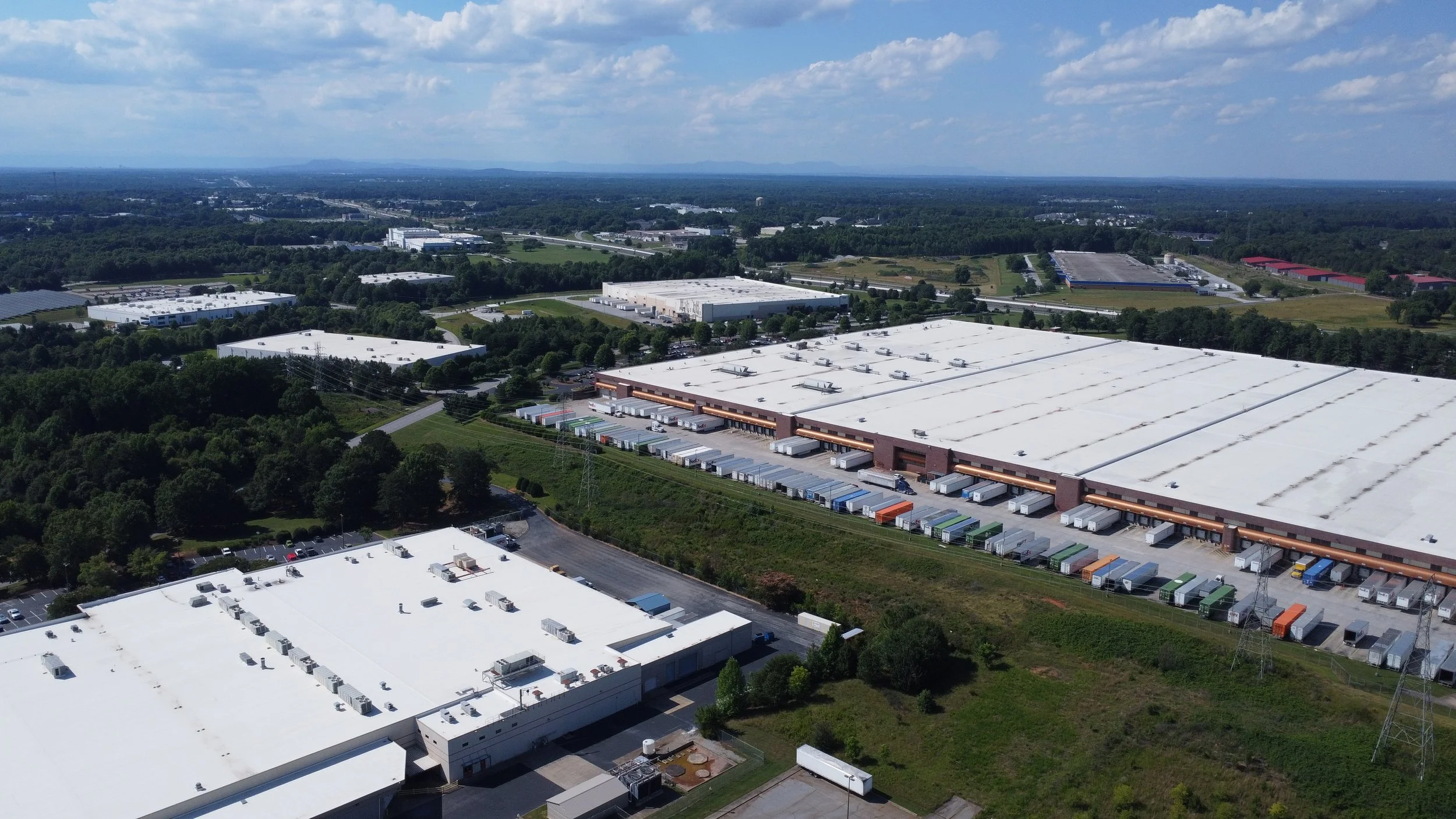
Boeing Hazelwood, Production Facility Roofing
The main production buildings on the Boeing Hazelwood campus are among the largest single-span structures in the St Louis metro, the assembly bays where F-15 and F/A-18 airframes are built are expansive, high-clearance buildings with large, contiguous flat-roof areas. These roofs are exposed to the full wind load of the north county airport corridor and carry significant rooftop mechanical systems that support the production environment, temperature and humidity controls, specialized ventilation, and utility distribution systems that cannot be interrupted during active production.
FOD prevention is the specific constraint that separates aerospace facility roofing from standard industrial work. Any material, a screw, a piece of fastening plate, a torn membrane fragment, that enters an active production area can cause catastrophic damage to aircraft components or assembly equipment. Every material brought onto the Boeing campus production area rooftop is controlled, inventoried, and accounted for. Debris containment during tear-off is engineered, not improvised. End-of-day FOD sweeps are part of the production closeout protocol.
Security requirements on the production building campus mean that every crew member who works on classified or restricted areas has completed the necessary background screening and badging process before they step on that roof. We plan the personnel qualification timeline into the project schedule, the badging process takes time, and we start it before mobilization, not after.
Berkeley Campus, Legacy McDonnell Douglas Buildings
The Berkeley portion of the Boeing campus includes buildings from the McDonnell Aircraft Corporation's formative years, mid-century industrial construction that supported the F-4 Phantom and early aerospace programs before the Moon Race. These buildings have a specific heritage status within the Boeing campus and within the St Louis aerospace community, and their maintenance is managed with a level of institutional attention that newer buildings do not receive.
The roofing systems on the older Berkeley campus buildings present the classic challenge of mid-century industrial construction: original built-up roofing on structural concrete or steel deck, multiple recover layers from subsequent roofing cycles, and a maintenance history that is documented in Boeing's facilities records but not always accessible to the roofing contractor in the pre-construction phase. I request full facility records review before scoping any Berkeley campus building, the layered construction history on these buildings has driven more than one project into a scope revision when the tear-off revealed conditions that were not anticipated.
The Berkeley campus also includes hangars and testing facilities with complex roof geometries, barrel-vault sections, multi-slope transition zones, and roof areas that serve both low-slope and steep-slope functions depending on the building's original program. We scope these buildings with specialty input from the preservation architect when the building's historic character is a factor in the scope decision.
Security Protocols and Classified Area Access
Working on any portion of the Boeing Defense campus requires adherence to Boeing's contractor security requirements. Personnel must be badged before entering any secured area, and certain buildings require additional screening for personnel who will work in or adjacent to classified manufacturing areas. We maintain relationships with Boeing's contractor-access management office in north county and have run the personnel qualification process for campus projects multiple times.
Escort requirements in certain campus areas mean that project managers and crew supervisors who have completed full campus badging must be present whenever unbadged workers are in access-controlled zones. That requirement affects how we staff campus projects, we ensure that the escort-qualified personnel on the project are not the bottleneck for production crew access.
Communication technology restrictions on certain areas of the Boeing campus affect how we coordinate production, standard smartphone photography for documentation may not be permitted in certain areas, and communication during production may require Boeing-issued devices or specific radio protocols. We review the communication requirements with Boeing's facilities team before mobilization and equip the crew accordingly.
Aerospace Supplier and Adjacent Industrial Facilities
The Hazelwood industrial corridor surrounding the Boeing campus includes a substantial cluster of aerospace supplier and sub-contractor facilities, companies that supply components, assemblies, and engineering services to Boeing's production programs. These facilities share some of the Boeing campus's operational constraints, controlled-access environments, specialized production equipment, and facility conditions that affect roofing scheduling and logistics, but are typically managed under standard commercial procurement rather than the Boeing campus's contractor qualification process.
For aerospace supplier facilities in Hazelwood and the adjacent McDonnell Boulevard corridor, We scope roofing projects with the same attention to production-environment protection and scheduling constraints that the Boeing campus requires. These are not standard warehouse roof replacements, they are production facility projects where a mid-project disruption can affect a supply chain that feeds an active defense program.
The north county aerospace corridor also includes several buildings that served original McDonnell Douglas programs and are now used by successor companies or have been repurposed for non-aerospace industrial use. The roofing systems on these buildings reflect their varied histories, some have been well-maintained through the ownership transitions, others have been deferred. I approach each of these buildings with a fresh inspection rather than assumptions based on the building's heritage.
Boeing Hazelwood and Aerospace Facility Roofing Documentation Standards
The Boeing Hazelwood facility on McDonnell Boulevard represents the largest single aerospace manufacturing site in the St. Louis metro, and the surrounding industrial corridor carries a network of aerospace subcontractors, defense electronics manufacturers, and precision manufacturing operations that collectively represent a significant concentration of institutional commercial building ownership. Roofing specifications and documentation at facilities in this corridor sometimes must satisfy quality system requirements that go beyond standard commercial practice.
We maintain familiarity with the documentation requirements common in aerospace manufacturing facilities, including the certification and credential documentation that some defense-adjacent operators require of contractors before building access is authorized. Pre-construction credential submission for Boeing-adjacent facilities typically requires contractor license verification, insurance certificate submission to the facility's specific requirements, and in some cases background check coordination for crew members requiring campus access.