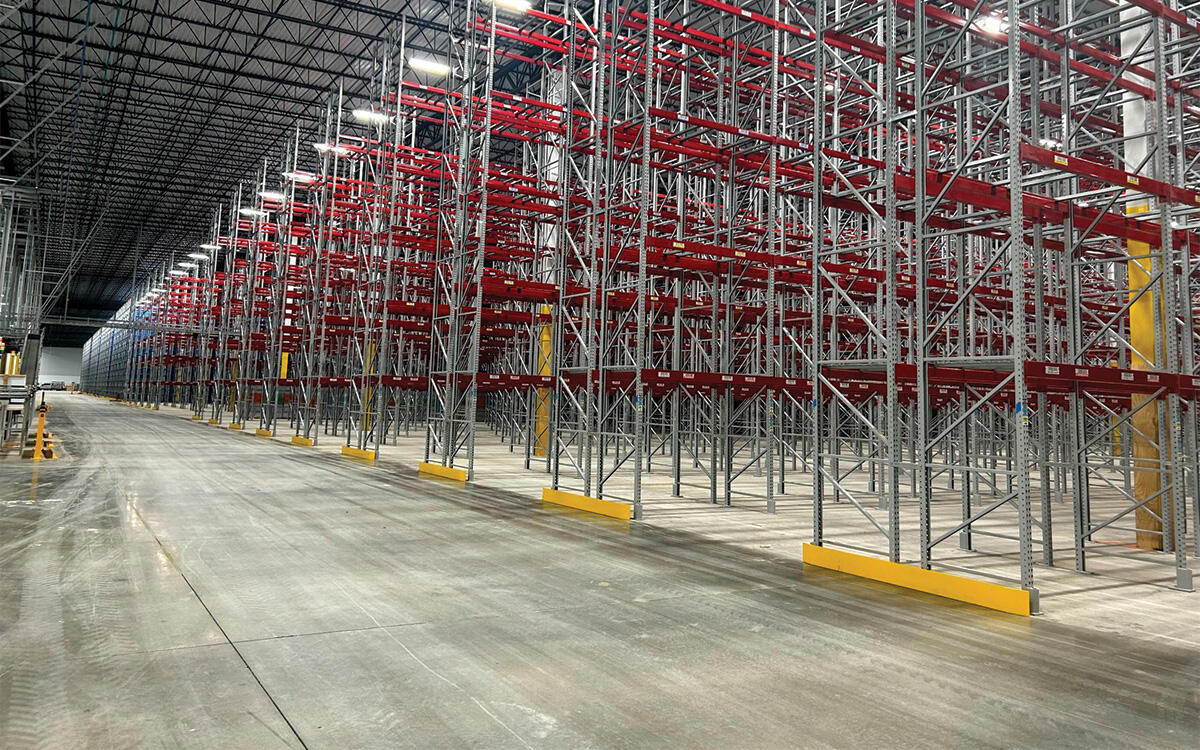
Lambert STL Cargo Facilities, Airport Coordination Requirements
The cargo ramp and freight transfer buildings at Lambert-St. Louis International Airport operate under FAA construction activity regulations that add a layer of coordination not present on a standard commercial job site. Crane heights near the airfield, material staging within the airport perimeter, contractor access through specific security entry points, and coordination with airport operations for any work that could affect aircraft movement corridors are all pre-mobilization items. A contractor who arrives at a Lambert cargo facility without prior airport authority coordination will not reach the work site on the first day.
We handle Lambert airport construction coordination as a pre-construction process item, not a field problem discovered after mobilization. The crane permit and height approval, the contractor badging process through the airport's security office, and the material staging plan within the cargo ramp restricted zone are all resolved and documented before any crew member arrives at the site. Airport cargo buildings that serve pharmaceutical, perishable, or time-sensitive freight have operational schedules that cannot absorb day-one access problems.
Earth City and Hazelwood Distribution Center Sequencing
The Earth City and Hazelwood industrial corridors north and west of Lambert hold some of the largest logistics roofing footprints in Missouri. Modern fulfillment centers of 500,000 to one million square feet, cross-dock facilities with high dock-door density, and cold-storage buildings supporting regional grocery and pharmaceutical distribution all operate in this corridor with production schedules that run continuously. Replacing a roof on a building of this scale requires phased sequencing that keeps the building fully protected at every point in the production cycle.
We plan large distribution roofs in production sections of 30,000 to 60,000 square feet, torn off and dried in within the same calendar day so the building is never exposed overnight. Each section's dry-in is confirmed before the crew moves to the adjacent section. Interior logistics inside a working distribution center shape the sequence: we coordinate with the facility's operations manager to understand which dock areas, rack locations, and staging zones need to stay clear of overhead roofing work at any given time, and we build that into the production schedule before mobilization.
Norfolk Southern Rail-Served Facility Constraints
Rail-served distribution and industrial facilities in the St. Louis metro, including Norfolk Southern's industrial customer facilities and the various terminal and yard buildings in the I-70 freight corridor, require a safety and staging plan that accounts for active rail movements through the property. Fall-protection requirements adjacent to active trackage, crane positioning that avoids rail clearance zones, and material staging that does not create conflicts with rail car movement are not generic safety document items. They require an understanding of the specific rail layout on the property and coordination with the rail carrier's track safety representative.
We produce a rail safety coordination plan for any project on a rail-served property, reviewed with both the facility's operations team and, where required, with the carrier's track safety contact before mobilization. The crane staging plan, the fall-protection tie-off locations, and the material delivery routing are all designed against the actual rail layout at the specific site.
Mississippi and Missouri River Port Facilities
The port infrastructure along the Mississippi south of the Gateway Arch and along the Missouri River barge corridor handles transloads between river vessels and truck or rail. Port buildings, covered storage, grain handling facilities, transfer sheds, and administrative buildings, operate in a high-humidity microclimate driven by the river's surface and the seasonal floodplain moisture cycle. This vapor environment drives moisture into roof assemblies more aggressively than inland St. Louis buildings, making vapor retarder position a primary specification decision on river-port facilities.
Buildings within the FEMA-mapped 100-year floodplain along the St. Louis riverfront also require specific attention to roof-to-wall transition details at the height above finished floor where flood water historically reaches. A standard roof membrane termination at the wall does not address flood-stage infiltration. We include flood-transition review in the inspection protocol for any port building within the mapped floodplain.
Derecho Wind Specification for Open-Field Logistics Buildings
St. Louis's position in the derecho wind corridor is a specific design input for large logistics buildings in the Earth City and Hazelwood industrial parks. Open-field distribution campuses in this area give prevailing west and southwest winds very little friction reduction before they reach the roof edge. FAA wind-exposure classifications for areas adjacent to Lambert's clear zones are more aggressive than the default suburban exposure category. A mechanically attached system specified for standard urban exposure will fail under conditions the building sees multiple times per decade.
We calculate mechanically attached fastener patterns against the building's actual ASCE 7 wind-uplift zone, exposure category, and roof zone. Corner and perimeter fastener densities are engineered at the level the load calculation requires, not taken from a standard interior fastener spacing that may have been adequate for a different building type. The calculation is documented and included in the project closeout package so the building owner has the design basis on record before the next severe weather event.
Dock Door Parapet Flashing and Perimeter Failure Points
The parapet above dock door bays on distribution buildings is among the most common leak location we document during inspections of older logistics facilities. Thermal cycling between the heated building interior and the cold exterior at the dock door wall, combined with forklift and truck vibration transmitted through the dock leveler into the building frame, stresses the roof-to-wall flashing at the dock door parapet in ways that a standard parapet section does not experience.
Correct dock-door parapet flashing uses a reinforced base sheet, a reglet termination into the masonry or metal wall panel, and a counter-flashing with enough overlap to handle the thermal movement at this location. We specify this detail as a standard scope item on every distribution building, not as an optional repair. The dock-door parapet is the most common warranty claim location on distribution buildings that were not detailed correctly at original installation, and it is a failure mode that is entirely avoidable with proper specification.