Industries

Logistics and Aviation Roofing in St. Louis

Lambert-St. Louis International Airport cargo operations, the Earth City and Hazelwood warehouse corridors directly north and west of the airfield, and the Mississippi-Missouri river-port freight infrastructure make St. Louis one of the largest inland logistics markets in the country. These buildings are large, operationally continuous, and rarely offer a clean shutdown window for roofing work.

Industries

Logistics and Aviation Roofing in St. Louis

Lambert-St. Louis International Airport moves cargo through freight transfer facilities, converted maintenance hangars, and temperature-controlled storage buildings that serve pharmaceutical, perishable, and high-value cargo flows. Every cargo building on an active airport perimeter adds FAA construction activity coordination to the standard commercial roofing scope. A contractor who has not navigated the airport authority's access, crane height, and staging approval process will spend the first week of a project clearing access problems rather than installing membrane.

The Earth City and Hazelwood industrial corridors, immediately adjacent to Lambert, carry some of the densest big-box logistics inventory in Missouri. Modern fulfillment centers of 500,000 to one million square feet, cross-dock facilities with high dock-door density, and cold-storage buildings supporting regional grocery and pharmaceutical distribution all occupy this corridor. St. Louis also sits at the confluence of the Mississippi and Missouri rivers, and the river-port infrastructure south of the Gateway Arch serves barge freight extending north to Minneapolis and south to New Orleans.

Large logistics buildings in St. Louis face a climate that punishes underspecified roofs. Derecho wind events produce sustained gusts above 70 mph, and the open-field exposure of a distribution campus in Earth City gives wind very little friction before it reaches the membrane. Ice storms in January and February deposit two to three inches of clear ice on rooftop surfaces, adding structural load and driving melt-water into deteriorated drain systems. The combination demands mechanically attached systems specified against actual wind-uplift calculations, not generic fastener patterns applied from a residential-construction default.

Logistics and Aviation Roofing in St. Louis

Scope clarity

What the written scope needs to settle

Lambert-St. Louis International Airport cargo operations, the Earth City and Hazelwood warehouse corridors directly north and west of the airfield, and the Mississippi-Missouri river-port freight infrastructure make St. Louis one of the largest inland logistics markets in the country. These.

The written recommendation should separate immediate water-control work, system-level defects, drainage concerns, warranty limitations, access constraints, and capital timing so ownership can decide without guessing.

Lambert STL Cargo Facility Coordination

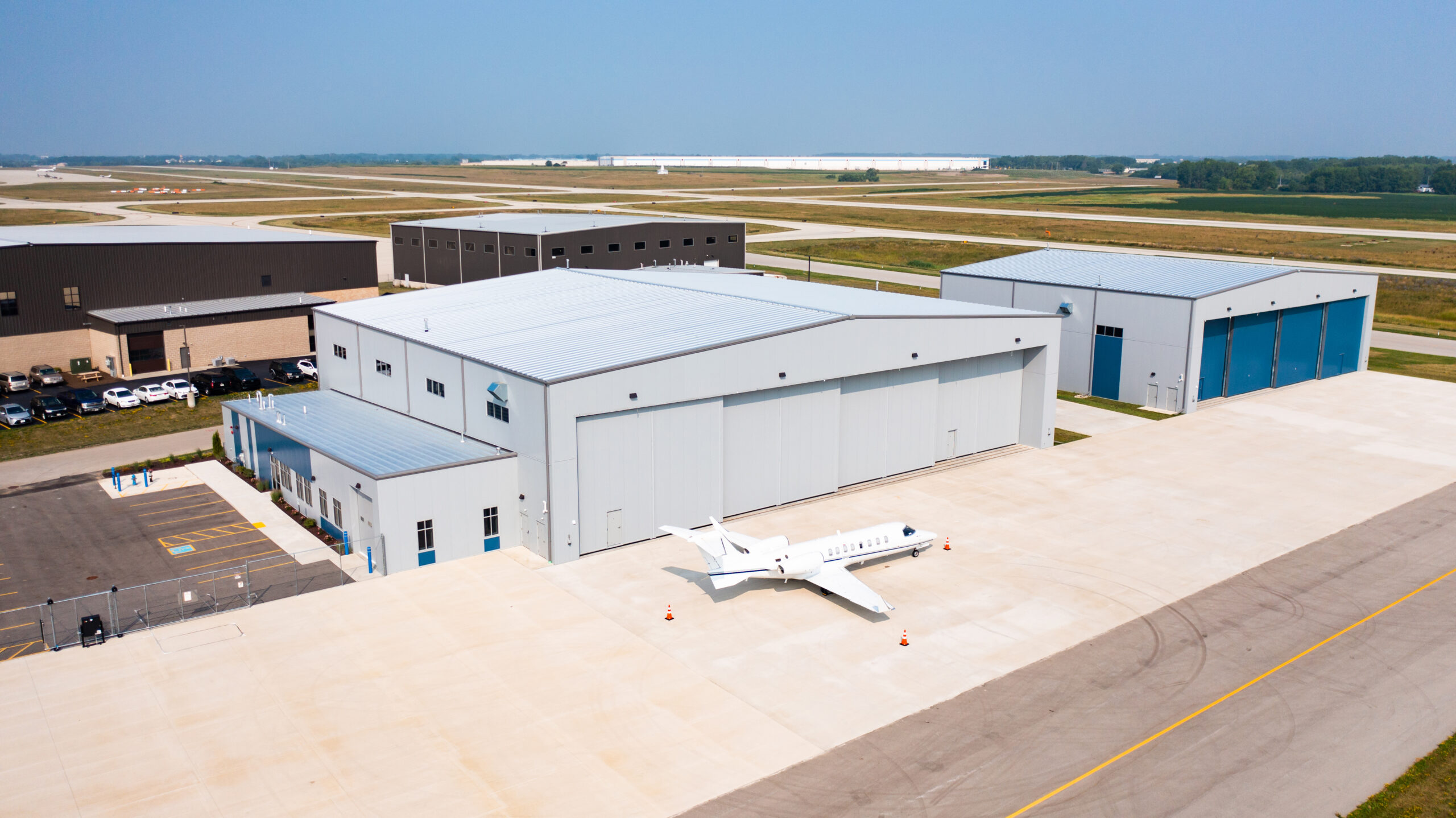
Cargo ramp buildings at Lambert operate within the airport perimeter under FAA construction regulations that restrict crane heights, material staging locations, and contractor access to specific gate-entry points. Work that could affect approach paths or aircraft movement corridors requires advance coordination with the St. Louis Airport Authority's operations center. Our project manager handles this coordination as a pre-construction item, not a field problem discovered on day one.

Airside security access at Lambert requires a Transportation Worker Identification Credential or escort by a badged airport employee. We manage the credentialing process for our project crews before mobilization, coordinate crane positioning with airport operations, and plan material staging against the cargo ramp vehicle-traffic patterns. These are standard pre-construction steps for airport roofing work, not exceptional accommodations.

Earth City and Hazelwood Distribution Center Sequencing

Distribution and fulfillment buildings in Earth City and Hazelwood run at production volumes that make any extended shutdown impossible. A regional distribution center shipping consumer goods around the clock has no natural roofing window. A cold-storage building supporting grocery distribution cannot be opened to ambient summer temperatures without triggering product loss. The roofing project has to sequence around the operation, not the other way around.

We plan large distribution roofs in production sections of 30,000 to 60,000 square feet, torn off and dried in within the same calendar day so the building is never exposed overnight. Each section's dry-in is documented in the daily production log. For cold-storage buildings, we coordinate the thermal isolation of the section being worked with the facility's refrigeration engineer before any membrane is opened.

Wind Uplift Specifications for Open-Field Industrial Buildings

The flat topography of the St. Louis north county industrial corridor gives prevailing west and southwest winds clear passage across the Missouri River bottom before they reach the roof edge of a building in Earth City or Hazelwood. FAA wind-exposure classifications for areas adjacent to airport clear zones are more aggressive than the default suburban exposure category. A mechanically attached TPO or EPDM system on a building in this zone that was specified for standard urban exposure will fail under conditions the building will see multiple times per decade.

We calculate mechanically attached fastener patterns against the building's actual wind-uplift zone, exposure category, and roof zone. Corner and perimeter fastener densities are specified at the engineered level required by the building's load calculation. The difference between a correctly specified system and an underspecified one is visible after the first derecho event that comes through the corridor.

Mississippi River Port Facilities

The port facilities along the Mississippi south of the Gateway Arch handle barge freight transloads between river vessels and truck or rail. Port buildings include covered storage, transfer sheds, grain handling facilities, and administrative buildings that serve the inland waterway trade. Structures at river's edge operate in a high-humidity microclimate driven by the river's surface and seasonal floodplain moisture, which accelerates vapor drive into roof assemblies in ways that buildings further inland do not experience.

Vapor retarder position in the roof assembly is a primary specification decision on river-port buildings, not an afterthought. The flood risk in the Mississippi River plain also means that roof-to-wall transition details must be specified to resist infiltration at flood stage, not just at normal precipitation. We include flood-transition review in our inspection protocol for any building within the FEMA-mapped 100-year floodplain along the St. Louis riverfront.

Cold Storage Roofing Requirements

Cold-storage and refrigerated warehouse buildings require a fundamentally different roof assembly than standard commercial construction. The insulation requirement for a minus-10-degree freezer building runs from R-40 to R-60 depending on climate zone, compared to R-25 for a standard heated warehouse. Thermal bridging at mechanical fasteners is a real performance issue at extreme insulation thicknesses, and the vapor retarder must be positioned above the insulation to prevent condensation within the insulation layer.

Failures in cold-storage roofing are expensive to remediate. Wet polyiso insulation in a freezer building cannot be dried in place. The only remediation is tear-off and replacement of the saturated sections. We assess vapor retarder position and insulation condition on every cold-storage building we inspect and give the owner a straightforward analysis before recommending a recover or replacement scope.

Dock Door Parapet Flashing and Perimeter Failure Points

The parapet above dock door bays on distribution buildings is among the most common leak location we document during inspections. Thermal cycling between the heated building interior and the cold exterior at the dock door wall, combined with forklift and truck vibration transmitted through the dock leveler into the building frame, stresses the roof-to-wall flashing at the dock door parapet in ways that a standard parapet section does not experience.

Correct dock-door parapet flashing uses a reinforced base sheet, a reglet termination into the masonry or metal wall panel, and a counter-flashing with enough overlap to handle the thermal movement at this location. We specify and install this detail as a standard scope item on every distribution building, not as an optional repair. The dock-door parapet is the most common warranty claim location on distribution buildings that were not detailed correctly at installation.


Start with evidence from the roof, then decide the repair, coating, recover, or replacement path.

Roof Questions

What owners usually need clarified

What coordination is required for roofing at Lambert STL cargo buildings?

Lambert cargo facilities require advance coordination with the St. Louis Airport Authority for crane height and positioning, access through specific security entry points, and TWIC or escorted badging for airside access. These are pre-construction items we manage before mobilization. A contractor who shows up to a Lambert cargo job without airport operations clearance will be turned away at the gate.

Can you replace a roof on a distribution center that runs 24 hours a day?

Yes. We sequence production in sections of 30,000 to 60,000 square feet with priority dry-in on every section. The building is never exposed overnight. We plan work around the facility's dock schedule, identify the lowest-activity shift for the most disruptive phases, and coordinate with the operations manager so production is not interrupted by roofing overhead.

How do you specify wind uplift for an open-field distribution building near Lambert?

We run the wind-uplift calculation against the building's actual exposure category, which for an open-field industrial campus adjacent to Lambert is typically Exposure C under ASCE 7. Fastener patterns are engineered at corner, perimeter, and field zone densities specific to the calculated uplift pressure, not at a generic interior spacing. The uplift calculation is provided in the project documentation.

What makes cold-storage roofing different from standard commercial warehouse work?

Insulation thickness runs two to three times higher than a standard warehouse, the vapor retarder must be positioned above the insulation to prevent warm-side condensation, and thermal bridging at fasteners becomes a performance issue at extreme insulation depths. Failures in cold-storage roofs require complete tear-off of saturated insulation, not in-place drying. We assess the existing assembly and vapor management before recommending a scope.

Related Roof Decisions

Keep the conversation connected

These pages cover nearby roof questions owners often need to resolve before a final scope moves forward.

Industries

Aerospace and Defense Roofing in St Louis

St Louis is a significant node in the U.S. defense manufacturing network. Boeing Defense operates two major campuses here, Hazelwood and Berkeley, producing F-15 and F/A-18 aircraft under long-running DoD contracts. The.

Industries

Automotive and Manufacturing Roofing in St. Louis

Tier-one and tier-two automotive suppliers across the I-270 and I-70 corridors operate large-span manufacturing buildings that present some of the most demanding flat-roof environments in the metro. Process exhaust,.

Industries

Brewery and Distillery Roofing in St Louis

St Louis has a brewing identity that runs from 1860 to the present, Anheuser-Busch's Soulard brewery campus is one of the most historically significant industrial complexes in the country, and the craft brewing movement.

Services

Commercial Roof Inspections in St Louis

A roof inspection from our team is a written condition report, not a verbal summary. We document what we find, membrane condition, flashing failures, drain status, penetration detail integrity, with photos keyed to a.

Roof Systems

TPO Roof Systems in St Louis

Thermoplastic polyolefin is the volume-grade flat-roof membrane for the St Louis commercial market. We install TPO on mechanically attached, fully adhered, and induction-welded configurations, each scoped to the.

Capabilities

Roof Condition Reporting, St Louis Commercial Buildings

Condition reports are the foundation of every capital decision we support. We produce written, photo-keyed reports that give St Louis building owners a zone-by-zone picture of the roof's current state, not a verbal.