Event Calendar Production Sequencing
We request the full-year event calendar for any arena or stadium roofing project at pre-construction and build the production schedule around it. A project on Enterprise Center starting in June and running through September has roughly 55 to 65 days of available roofing time across those months after blocking out event days, setup days, and cleanup days. The production schedule has to achieve the project's total scope within those windows. Planning precision that a generic commercial roofing schedule does not provide is the baseline requirement on a venue account.
Production sections adjacent to occupied event spaces have specific end-of-day requirements. No section above a concession area, club lounge, or executive suite zone goes to end of day without dry-in membrane installed, regardless of how the production day has gone. Water intrusion above an occupied concession or event floor during a game creates a liability situation that no roofing contractor can manage on site.
Large-Span Expansion Joint Specifications
Arena and stadium roofs span distances that concentrate thermal movement at expansion joints far beyond what a standard commercial building experiences. A structural steel arena roof spanning 400 feet may see three to four inches of thermal movement across the St. Louis temperature range. Standard commercial expansion joint assemblies are not rated for this movement range. The joint cover, the membrane overlap at the joint, and the drainage detail at the joint all need to be specified against the calculated movement of the specific structure.
We calculate thermal movement for arena roofs based on the structural span, the material composition of the frame, and the temperature range for the St. Louis climate. Expansion joint specifications are submitted to the venue's structural engineer of record for review before installation. Joint systems are selected from manufacturers with specific product ratings for the calculated movement range, not from a standard commercial detail catalog.
Fox Theatre and Historic Venue Requirements
The Fox Theatre on Grand Boulevard is a 1929 Siamese-Byzantine landmark and one of the most recognized performance venues in the country. The building's historic designation means roofing work on any portion of the exterior envelope requires coordination with the State Historic Preservation Office and the City of St. Louis Preservation Board. The Fox's roof inventory includes original terra cotta and ornamental metal elements on the Grand Boulevard facade and flat roof sections over the house and stage that carry the waterproofing load.
Historic venue roofing requires a contractor who understands that the building is the primary asset, not just its weather resistance. We coordinate historic compliance review as a pre-construction item on properties with designation status. Replacement system selection on the Fox and similar venues accounts for visual character as seen from adjacent elevations, not only the waterproofing performance of the new membrane.
Entertainment Corridor and Mixed-Use Venue Roofing
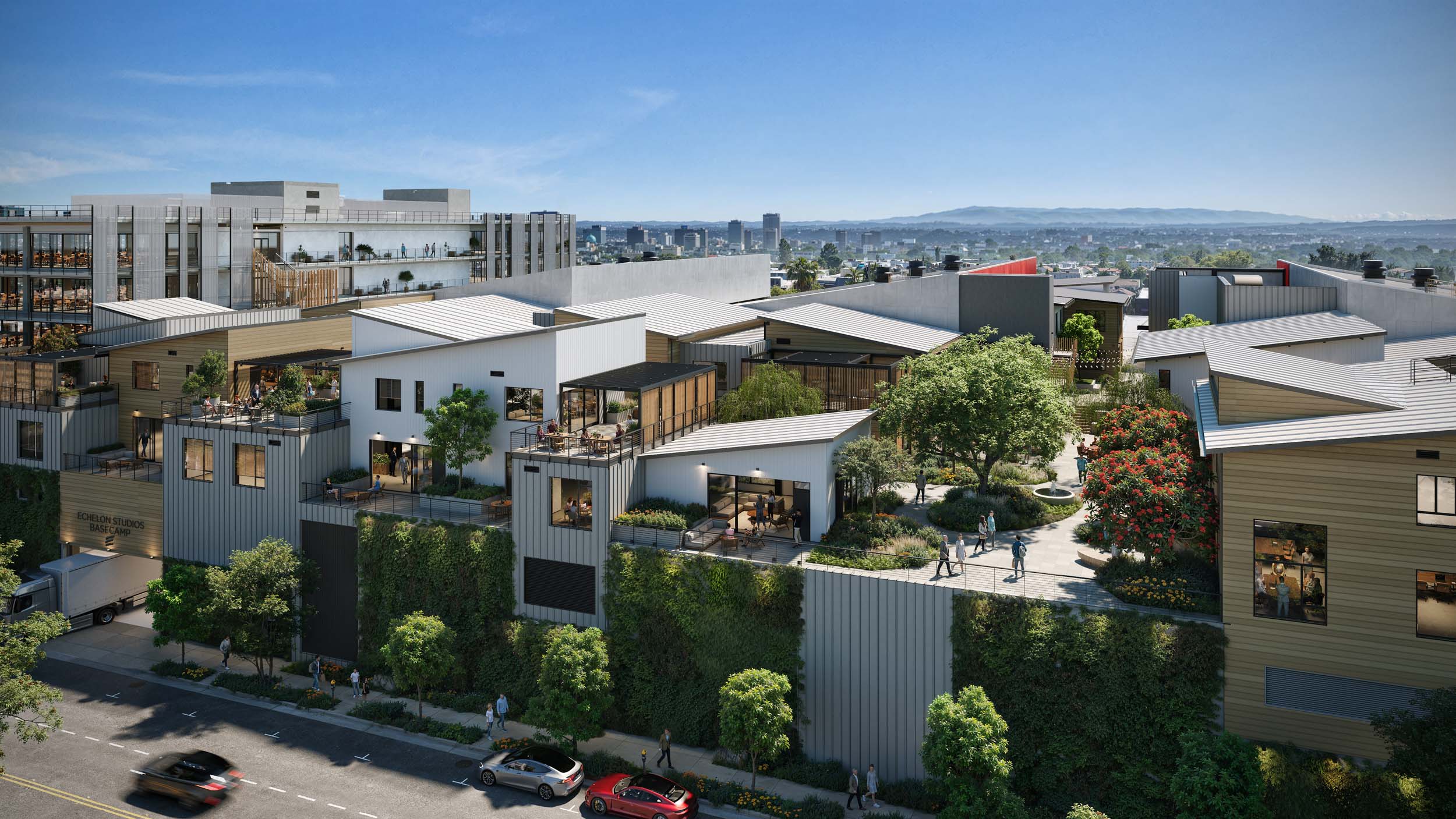
Ballpark Village west of Busch Stadium, the entertainment buildings along the Gateway Arch riverfront, and the Grand Center arts district venues along Grand and Lindell present a different profile from the major arenas. These are smaller commercial buildings, often converted historic structures or purpose-built entertainment venues, with roofs that serve both operational and public gathering functions.
Rooftop outdoor decks and terraces on entertainment buildings require a roofing assembly that performs as both waterproofing and finished surface. Liquid-applied waterproofing systems or pavers over drainage mat over a protected membrane are the standard approaches for occupied rooftop entertainment spaces. We specify and install both systems and understand the drainage design requirements that occupied rooftop surfaces impose.
Food Service and Concession Area Protection
Arena and stadium concession areas, club lounges, and food service kitchens operate directly below the roof membrane in most venues. A roof failure above a food service area creates both an operations problem and a health inspection trigger. Any water infiltration above an active concession stand is treated as an emergency, not a maintenance call, because the operational and liability consequences are immediate.
We designate all food service areas on the venue floor plan as no-opening zones: no membrane is removed above a food service space without priority dry-in installed before the area opens for the next event. Kitchen exhaust penetrations on arena roofs receive metal collar flashings with silicone-sealed terminations, replacing standard rubber pipe boots that degrade from grease condensate and elevated exhaust temperatures.
Drainage Engineering on Large Venue Roofs
A 400,000-square-foot arena roof collecting a one-inch rainfall in one hour delivers a flow rate to the drain system of approximately 13,000 gallons per minute at the peak of a design storm event. Standard commercial internal drain configurations designed for a 10,000-square-foot office section are not the same engineering problem. Arena and stadium roof drainage requires hydraulic capacity calculations, overflow drain sizing for 100-year storm events, and in some cases scupper overflow systems that safely direct extreme rainfall away from occupied areas below.
We include drain capacity assessment in every inspection of a large venue roof. Where drain capacity is inadequate for the calculated design storm, we include drain addition or upsizing in the replacement scope. Tapered insulation to eliminate flat and inverse-sloped zones improves drainage velocity and reduces the probability of ponding water remaining on the roof surface between events.