Vapor Management in Active Distillery Buildings
The vapor drive in an active distillery is significantly higher than in a standard commercial building and higher than in most brewery environments. Distillation requires sustained heat approaching boiling, generating a continuous moisture load in the building interior. Interior relative humidity in a distillery production space during a still run can reach 80 to 90 percent. That moisture is looking for the path of least resistance through the roof assembly, and if the vapor retarder is not correctly positioned, insulation is the first casualty.
On existing distillery buildings we pull moisture cores at multiple locations before recommending any recover or replacement scope. Wet polyiso or saturated insulation in a distillery building needs to be removed, not covered. Recovering over saturated insulation in a high-vapor environment accelerates moisture accumulation and membrane failure. We give the owner the core results and a clear recommendation before the scope is finalized.
Still Vent Penetration Flashings
Still vent stacks exhaust steam, ethanol vapor, and condensate-laden air at temperatures and chemical concentrations that degrade standard rubber pipe-boot flashings rapidly. A standard EPDM pipe boot on a pot still vent will oxidize and crack within two to three distillation seasons from the combination of heat and ethanol vapor exposure. When a flashing fails at a still vent, the leak typically appears directly below the vent stack, where product and fire risk are both concerns.
We specify stainless steel or galvanized metal collar flashings with silicone-sealed terminations at all distillery still vent penetrations. The metal collar is sized to allow thermal expansion at the vent pipe without cracking the sealant, and the sealant is rated for chemical and heat resistance in the temperature range of the vent exhaust. Every still vent penetration is documented during the pre-construction inspection and the correct flashing specification is included in the project scope.
Historic Masonry Buildings in Soulard and South City
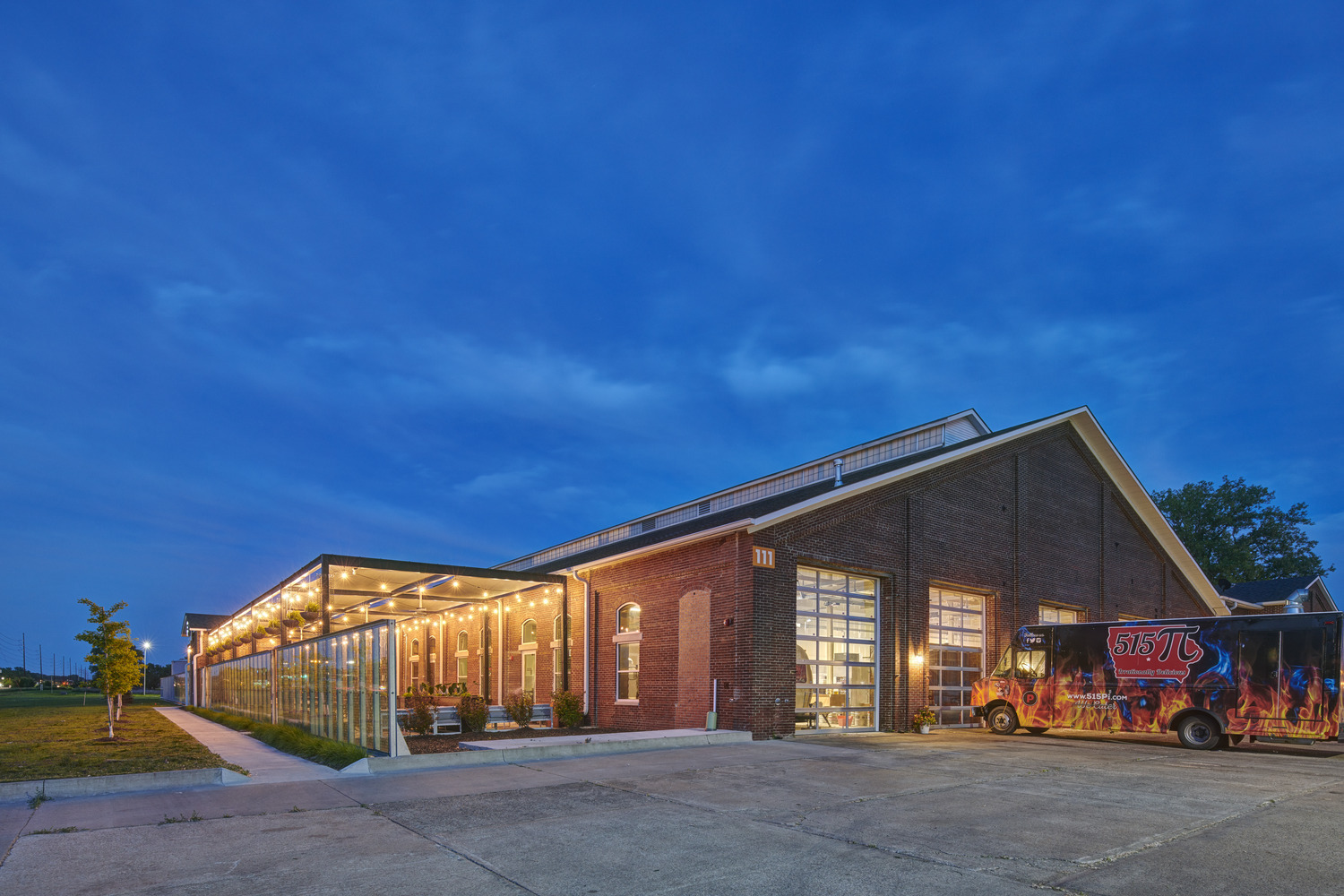
The brick warehouse and industrial buildings in Soulard, Benton Park, and the adjacent South City neighborhoods present a common set of challenges for craft distillery roofing. Unreinforced masonry parapets with freeze-thaw cracking at mortar joints, cast-iron drain systems that have corroded at the strainer baskets, and roof assemblies with three or four generations of built-up roofing on original wood plank or concrete deck are the conditions we encounter on virtually every historic building inspection in these neighborhoods.
Before a replacement scope is written on a historic masonry building, we assess the parapet condition and the deck capacity. An unreinforced masonry parapet that has shifted or cracked cannot receive a standard through-wall flashing without remediation. We coordinate masonry assessment with a structural engineer on any historic building where the parapet condition raises load or stability questions. That assessment is a pre-construction item, not a mid-project discovery.
Multi-Use Distillery and Event Space Sequencing
Many St. Louis craft distilleries operate with both production and customer-facing spaces in the same building. A production floor with stills and barrel storage adjoins a tasting room, event venue, or retail area. The roofing requirements for the production zone and the guest zone differ: the production zone needs vapor management and chemical-resistant penetration flashings, while the guest zone may have skylights, rooftop deck access, or HVAC systems serving climate-controlled space that must not be disrupted during roof work.
We plan the sequencing of multi-use distillery projects around the event calendar. A tasting room that has booked private events every weekend cannot have its HVAC disrupted during work above it on those dates. Production sections, which are less sensitive to public-facing scheduling constraints, are worked first so the crew can move to the tasting room zone when the production schedule allows.
Ice and Freeze-Thaw Impact on Distillery Roofs
St. Louis winters produce ice storm events that deposit two to three inches of clear ice on rooftop surfaces. For a historic masonry building with a parapet weakened by freeze-thaw over decades, the additional load from an ice storm can accelerate parapet failure. Ice damming at drain openings on buildings with inadequate slope is another common failure mode: melt-water from the roof field backs up behind ice at the drain and finds the lowest penetration point in the membrane.
We assess drain capacity and internal slope on every distillery building we inspect. Drain improvements, including additional emergency overflow drains and tapered insulation to eliminate flat or inverse-sloped zones, are standard components of a replacement scope on buildings where drain capacity is inadequate. No replacement scope on a St. Louis distillery building omits the drainage assessment.
Active Production Scheduling on Working Distilleries
A craft distillery that is producing spirits cannot pause for a roof project. Barrel filling and aging schedules, bottling commitments, and tasting room operations are all continuous. The roofing sequence must be planned around the distillery's production calendar in the same way a manufacturing facility project is planned around its production schedule.
We engage with the distillery's production manager in pre-construction to identify which building sections can be worked during which periods, and we build the production sequence into the project timeline before mobilization. On most craft distillery projects, the production floor is worked during the distillery's planned maintenance downtime and the non-production areas are accessible throughout the project. The sequencing plan is in writing before the project starts.