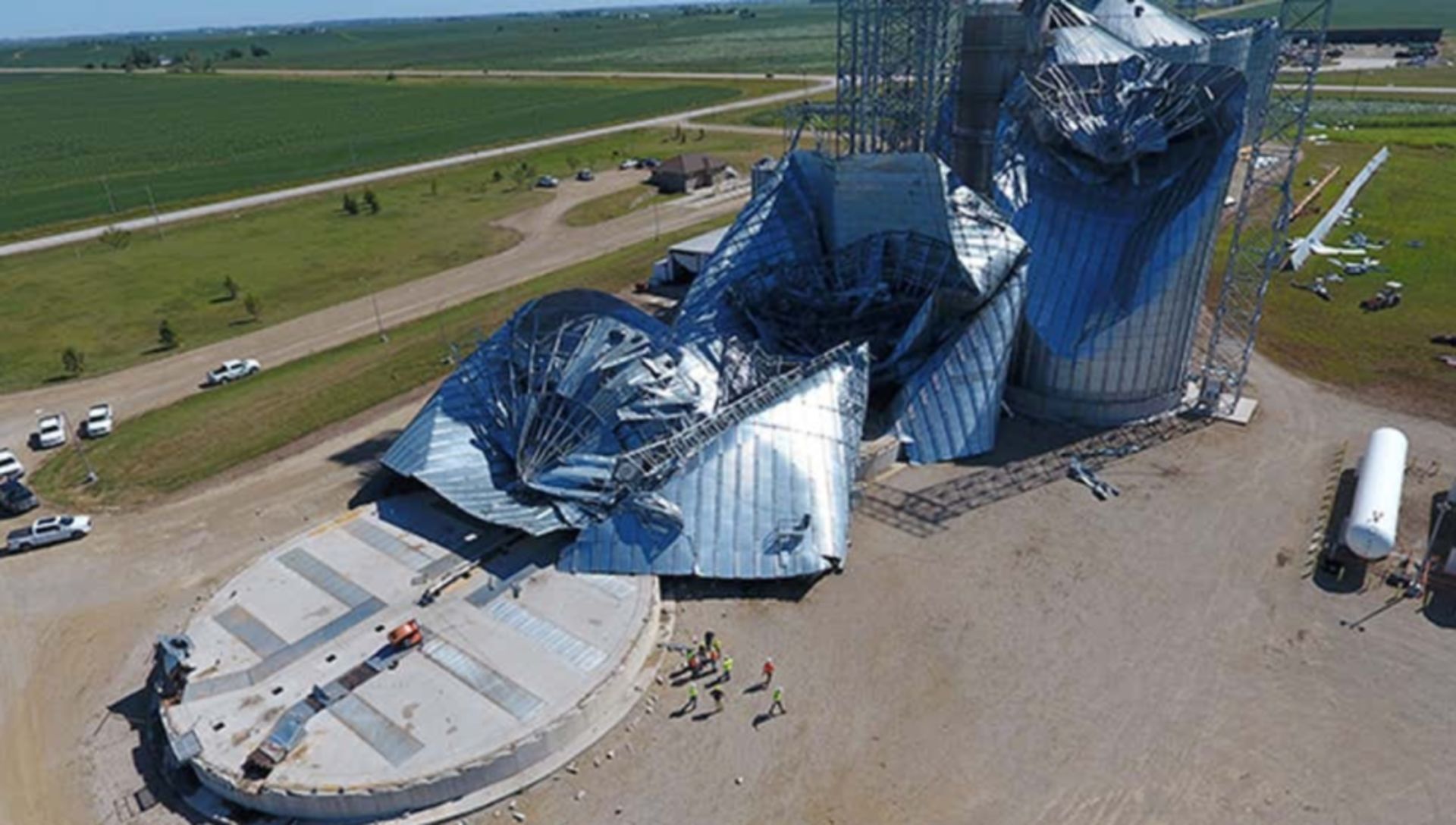
Derecho Damage Patterns We Document on St Louis Commercial Roofs
Perimeter-zone membrane lift and separation: The most common derecho damage pattern on mechanically attached systems. Membrane in the perimeter zone is lifted at the edge detail, pulled back from the edge metal, and in severe cases rolled inward across the adjacent field. Buildings facing southwest, the prevailing approach direction for Missouri derechos, show the most severe perimeter damage on the southwest face where sustained wind pressure is highest.
Edge-metal failure: Derecho wind pressure on perimeter edge metal, gravel stops, fasciae, and coping, can pull termination bars and edge-metal flanges away from the substrate. Once the edge detail fails, the membrane behind it has no attachment against the sustained wind load. We document every linear foot of edge metal on derecho-damaged buildings and include edge metal replacement in the scope wherever displacement or deformation compromises the seal.
Mechanically attached field-membrane flutter: On large warehouse roofs where the membrane was attached at marginal fastener density across the field, the sustained wind load causes the membrane to flutter between fastener locations, fatiguing the material at each fastener plate hole. This damage is not visible on a surface walkover. It shows up as progressive leaks at fastener locations over the following months.
Repair Approach for Derecho-Damaged Roofs
Emergency stabilization: For buildings with active membrane loss or displaced HVAC units, emergency tarping and temporary attachment is the first response. We document pre-repair conditions exhaustively before any emergency work begins so that insurance documentation of the event damage is not contaminated by emergency repair activity. The pre-repair photographs and zone diagram are the foundation of the insurance submission.
Perimeter zone repair: Perimeter membrane replacement uses full-width rolls of manufacturer-compatible membrane mechanically fastened at the density specified in the manufacturer's perimeter zone design tables, not at field density. Where the original installation was underspecified, the repair is an opportunity to bring the perimeter zone up to the design standard that the original installation missed. We document the upgraded fastener pattern in the repair closeout package.
Edge-metal replacement: Damaged edge metal is replaced with new material meeting ANSI/SPRI ES-1 requirements. The seam overlap and fastener spacing on new edge metal is documented for the closeout package.
The 2024 St Louis Derecho: What We Learned
The 2024 derecho events provided clear data on which commercial building configurations sustained the most damage in the St Louis metro. Large-footprint industrial and warehouse buildings in Earth City, Hazelwood, and the St Charles County industrial parks were disproportionately represented in the severe-damage population. Buildings with older mechanically attached TPO systems, installed before the more recent ASCE 7 wind-uplift revisions tightened the perimeter zone fastener requirements, were the most vulnerable.
Shorter buildings in urban positions, the Clayton CBD towers, mid-rise office buildings in Creve Coeur, generally fared better because their parapet walls and adjacent taller buildings provided some wind-load shielding. The most vulnerable configuration in the 2024 events was a single-story warehouse of 50,000 square feet or more on a flat, open site, facing southwest, with mechanically attached TPO installed more than 15 years ago.
If your building matches that description and has not had a post-derecho inspection since 2024, the membrane field may have sustained fatigue damage at fastener locations that is not yet producing leaks but will. We recommend a proactive inspection before the next storm season rather than waiting for interior leaks to motivate the call.
Exposure Category Determination for the St Louis Metro
One of the most consequential errors in the St Louis commercial roofing market is applying a suburban Exposure B wind calculation to buildings that actually sit in open-field Exposure C positions on the Missouri River floodplain or adjacent to Lambert Airport's clear zones. The difference in required perimeter-zone fastener density between Exposure B and Exposure C is significant, and the buildings that failed in the 2024 derecho consistently had Exposure C characteristics with Exposure B fastener patterns.
We determine exposure category from the building's actual site conditions: terrain roughness in each wind approach direction, distance to the open terrain upwind, and proximity to features that would provide meaningful wind shielding. That determination is documented in writing and included in the project specification and the closeout package. A building owner on the Missouri River floodplain at Earth City deserves to know that their building is in an open-exposure wind zone before the next derecho event, not after.
Post-Derecho Inspection Program for the Earth City and Hazelwood Corridors
The Earth City and Hazelwood industrial corridors are the highest-risk commercial zones in the St Louis metro for derecho membrane damage because of their open-field terrain adjacent to the Missouri River and Lambert Airport. Buildings in this corridor that have not had a post-derecho inspection since the 2024 events carry an unknown risk exposure. The membrane may appear intact on the surface while having sustained fastener-fatigue damage that will produce leaks during the next significant rain event.
We offer post-derecho inspection as a standalone service for buildings in these corridors, with a written report that includes probe testing of all seams in the perimeter zone, fastener pull-tests at a representative sample of locations, an exposure category determination for the specific site, and a written assessment of the risk exposure based on the installed fastener pattern versus the calculated requirement. The inspection cost is a fraction of the cost of a claim and the business disruption that follows a membrane blow-off in the next derecho event.
Derecho Damage Documentation for Insurance Submission
Derecho roof damage claims require different documentation than hail claims because the failure modes are different. Hail damage is visible at the membrane surface. Wind damage often shows at the perimeter, at the fastener pattern, and at attachment hardware rather than at the field membrane center. Adjusters who apply hail inspection protocols to derecho damage miss the critical failure modes, and claims based on hail-protocol documentation of wind damage are frequently disputed.
Our derecho inspection document includes: a wind-uplift calculation for the building's actual exposure category, a fastener pull-test on a representative sample of the existing field fasteners, a perimeter survey with photo documentation of every lifted membrane edge and bent fastener plate, an edge metal survey, a rooftop equipment attachment assessment, and an interior ceiling walk to correlate surface damage to specific roof failure points. This package gives the adjuster what they need to evaluate the claim without a second field visit to resolve documentation gaps.